
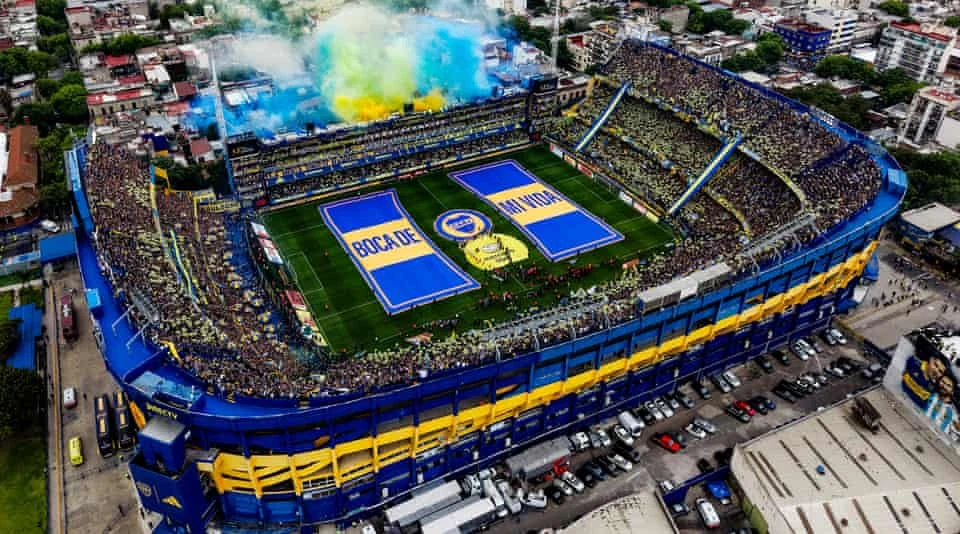
Boca Juniors beat River Plate 1–0 at La Bombonera on 1 November, with River reduced to nine players by the end. In The Guardian, Marcela Mora y Araujo reported that the result secured Boca a place in the following year’s Copa Libertadores through Argentina’s aggregate table, while examining the derby as a cultural experience.
A home crowd without its visiting counterpart
The dispatch describes coordinated blue-and-yellow umbrellas and the rhythms of Boca’s home end. It also notes what was absent: most Argentine football has operated without visiting supporters since restrictions introduced in 2013.
Some people welcomed the change as making attendance more family-friendly and increasing availability for club members. The author also recalled journalist Ezequiel Fernández Moores describing suppressed away-team celebration at the first Superclásico played under those conditions.
These observations concern the atmosphere and personal experience of attending, rather than a claim to speak for every supporter.
History is part of the account, not a new incident
The piece revisits the 1968 Puerta 12 disaster, the killing of two River fans in 1994 and the attack on Boca’s team bus before the 2018 Libertadores final. They are historical episodes, not casualties reported at the latest match.
Family memories provide another thread. Mora y Araujo recalls attending with relatives and hosting a River-supporting friend among Boca fans. Her own son supports River, leaving a shared visit to the derby difficult under the separation of supporters.
Boca now have their Libertadores qualification to build towards. The broader next question raised by the dispatch is whether families divided in allegiance might one day attend together. That is the author’s hope, rather than an announced change to spectator policy.