
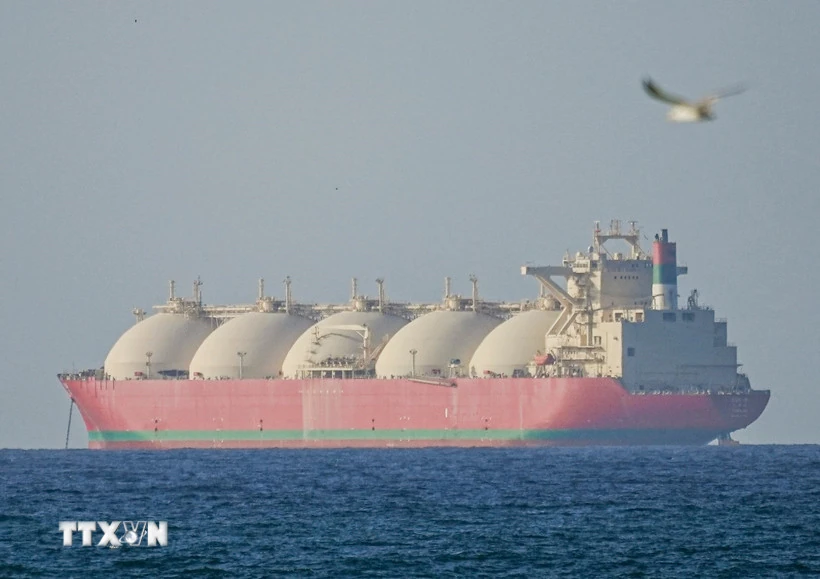
Oil prices fell on 26 October, backing away from roughly six-month highs on hopes that tensions between the US and Iran would ease, VietnamPlus and VnExpress reported. At 14:44 Vietnam time, Brent was down 1.28% at 115.23 USD a barrel and WTI down 1.7% at 101.51 USD. Elsewhere in energy, though, the squeeze continued: chartering a tanker from the US to Asia still costs around 60 million USD a voyage, and European gas briefly rose above 97 euros per megawatt hour (MWh), the highest since 2022.
Oil on 26 October
| Time | Brent | WTI | Source |
|---|---|---|---|
| Monday's opening | 114.8 USD/barrel, down 1.6% | 101 USD/barrel, down nearly 2% | VnExpress |
| 14:44 Vietnam time | 115.23 USD/barrel, down 1.28% | 101.51 USD/barrel, down 1.7% | VietnamPlus |
Vandana Hari, founder of Vanda Insights, said fears of renewed military conflict in the Middle East, which drove most of the rally in the week of 19-23 October, had eased, but the lull may not last because Washington had left open the possibility of another military campaign against Iran; she expects prices to stay volatile with risks tilted to the upside, VietnamPlus reported. Priyanka Sachdeva of Singapore broker Phillip Nova said the dip reflected investors adjusting positions and managing risk rather than any real improvement in supply around the Strait of Hormuz.
Key dates (compiled by KBVN+)
- 28 February: the US and Israel launch a war against Iran, disrupting commercial shipping through the Strait of Hormuz and the Bab el-Mandeb Strait (VietnamPlus).
- Week of 19-23 October: Brent briefly tops 116 USD, its highest since late April (VnExpress); over the week Brent gains 6% and WTI 2.3% (VietnamPlus). The US Department of Energy orders an emergency release of 400,000 barrels from the strategic reserve for Phillips 66's Lake Charles refinery in Louisiana; US oil reserves are at their lowest since 1982 (VnExpress, drawing on Reuters and CNBC).
- 23 October: oil closes nearly 3 USD higher after Houthi attacks in Saudi Arabia (VietnamPlus).
- 24 October: the Houthis say they attacked an airport and oil facilities in Saudi Arabia (VietnamPlus).
- 25 October: Saudi Arabia says it intercepted several missiles and drones (VnExpress).
- 26 October: oil falls; the energy ministers of Saudi Arabia and Singapore say Saudi Aramco will start storing crude in Singapore from the second half of 2027 (VietnamPlus).
Freight once ten times pre-war levels
According to VietnamPlus, a single cargo of crude from the US Gulf of Mexico to China cost as much as 80 million USD at one point in early October, ten times the average freight rate for many years before the Iran conflict. Although it has eased from that peak, hiring a very large crude carrier (VLCC) from the US to Asia in the week starting 26 October still costs around 60 million USD a voyage. Randy Hawkins, vice-president for international crude supply and trading, was cited by VietnamPlus as saying the cost on this route now averages 30-35 USD a barrel, against about 5 USD a barrel in 2025.
Part of the problem is a shortage of ships: many supertankers wait for weeks to carry out ship-to-ship transfers in the Gulf of Oman, outside the Strait of Hormuz. Bloomberg, cited by VietnamPlus, reported that since early October Asian refiners have booked about 25 million barrels of US crude for November delivery, roughly 50% less than in September. Shipping trackers say that if bookings stay low, US crude arrivals in Asia in November could fall to a seven-year low.
Europe's gas squeeze
According to VietnamPlus, the front-month gas contract in Amsterdam rose 3.2% to 96.88 euros per MWh on the morning of 26 October (local time). Traders expect heating demand to climb as temperatures drop sharply, at a time when global supply is tight and Europe risks a price contest with other buyers, especially in Asia.
| Indicator | Latest reading |
|---|---|
| European gas price | Briefly above 97 euros/MWh, highest since 2022 |
| EU gas storage | About 75% full, lowest for the time of year in data going back to 2009 |
| German gas storage | Just over 61% |
| French front-month power | Above 200 euros/MWh, first time since January 2023 |
Europe's liquefied natural gas (LNG) imports since the start of October remain below the same period of 2025. Prices are still well below the peak of the previous energy crisis, but the latest rise risks adding to inflation and weighing on economic activity.
What's next
International Energy Agency (IEA) executive director Fatih Birol told an event in Singapore on 26 October that he does not expect the 2027 energy market to return to where it was before the Iran war, VietnamPlus reported. On diesel, VnExpress said the first Russian cargo under an export deal with the US is heading to New York; US President Donald Trump announced the deal in early October to cool diesel prices before the US midterm elections on 3 November. In Europe, the points to watch are heating demand as the weather turns colder and LNG imports during the peak consumption season, with storage unusually low.