
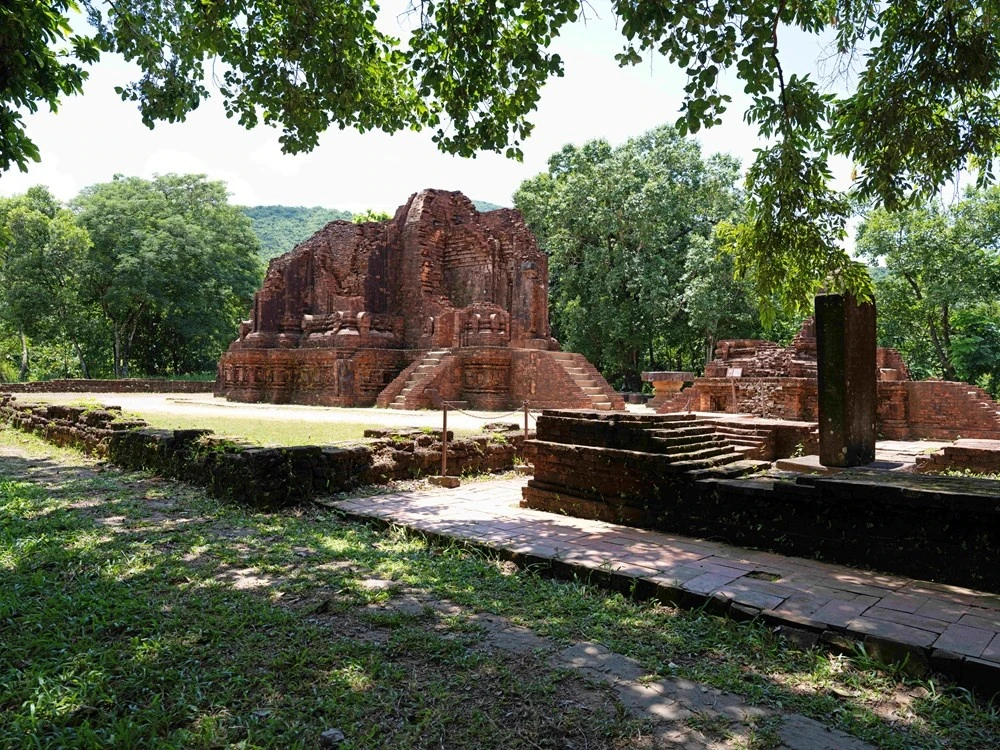
The author proposes interpreting the number through Tantric symbolism, linking it to sacred syllables and the idea of a temple as a body of mantras. These connections are his interpretation of religious meaning rather than a newly announced archaeological finding.
The article places the G-group temples in the context of 12th-century Champa and the consolidation of royal authority. It considers the Kala faces and lion sculptures as clues to relationships between architecture, belief and power.
The approach offers another perspective on My Son while leaving a distinction between recorded architectural features and hypotheses about the symbolism behind them.