
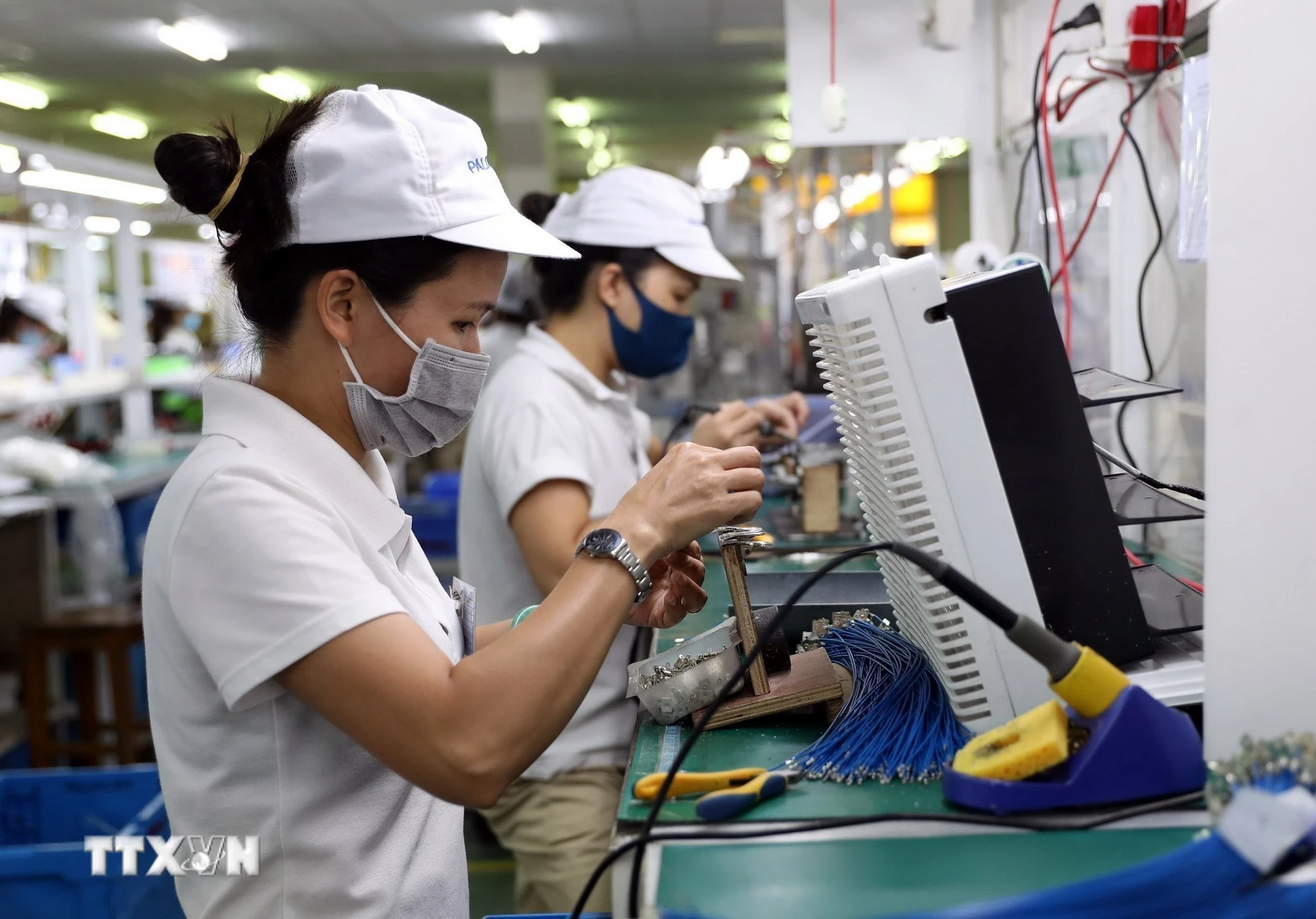
Vietnam's total goods trade reached an estimated $1,010 billion in the first 10 months of 2026, up 32.3% year on year and above $1,000 billion for the first time, VietnamPlus reported, citing the Ministry of Industry and Trade. Exports were estimated at $499 billion, up 27.4%. But to reach its full-year GDP growth target of 10%, the economy needs to grow about 12.5% in the fourth quarter, which Deputy Prime Minister Nguyen Van Thang told the National Assembly on 31 October was very challenging but not impossible.
Key numbers, compiled by KBVN+
| Indicator | Figure |
|---|---|
| Goods trade, 10 months | About $1,010 billion (+32.3%) |
| Exports, 10 months | About $499 billion (+27.4%) |
| Registered FDI | $50.36 billion (+76.4%) |
| Disbursed FDI | $21.07 billion (+12.1%) |
| Average CPI, 9 months | +4.52% |
| Growth needed in Q4 | About 12.5% |
| Inflation room from petrol tax and power price cuts | About 0.07 of a percentage point |
| Public investment contribution if 100% disbursed | About 2.5 points to Q4 growth, 1.7 points for the year |
The FDI figures were cited by Bui Quang Tuan, vice chairman of the Vietnam Economic Science Association.
From $100 billion to $1,000 billion
When Vietnam joined the World Trade Organization in 2007, its trade had only just passed $100 billion. In nearly 20 years it has grown about tenfold. Nguyen Quoc Viet, head of macro research at the University of Economics, Vietnam National University Hanoi, said this reflects opening up, integration and stronger production capacity, and Vietnam's deeper role in global supply chains. Foreign investment continues to expand manufacturing, electronics and technology. At company level, Sao Thai Duong JSC aims for growth above 20% and is focusing on nearby markets such as China and Hong Kong as logistics costs rise.
Risks for the final two months
Tuan said the world economy in late 2026 and 2027 faces geopolitical conflict, oil prices, tight financial conditions and the tech investment cycle, with global growth forecast at 3.1% in 2026, down from 3.5% in 2025. That could raise Vietnam's costs for imported materials and shipping and hit export orders. Inflation, at 4.52% on average over nine months, remains a pressure point.
To cut costs, from 1 November 2026 the average retail electricity price fell 2% to 2,159.9037 dong per kWh before VAT, the special consumption tax on petrol was cut to 0% until 31 March 2027, and a 2% VAT reduction continues until the end of 2026.
What comes next
The outlook for November and the rest of the year depends on sustaining exports, expanding industrial output, boosting consumption and speeding up public investment, which the government has made a priority. It is also working to remove bottlenecks in regulation, land, investment procedures, capital and markets so that ready projects can start operating sooner.