
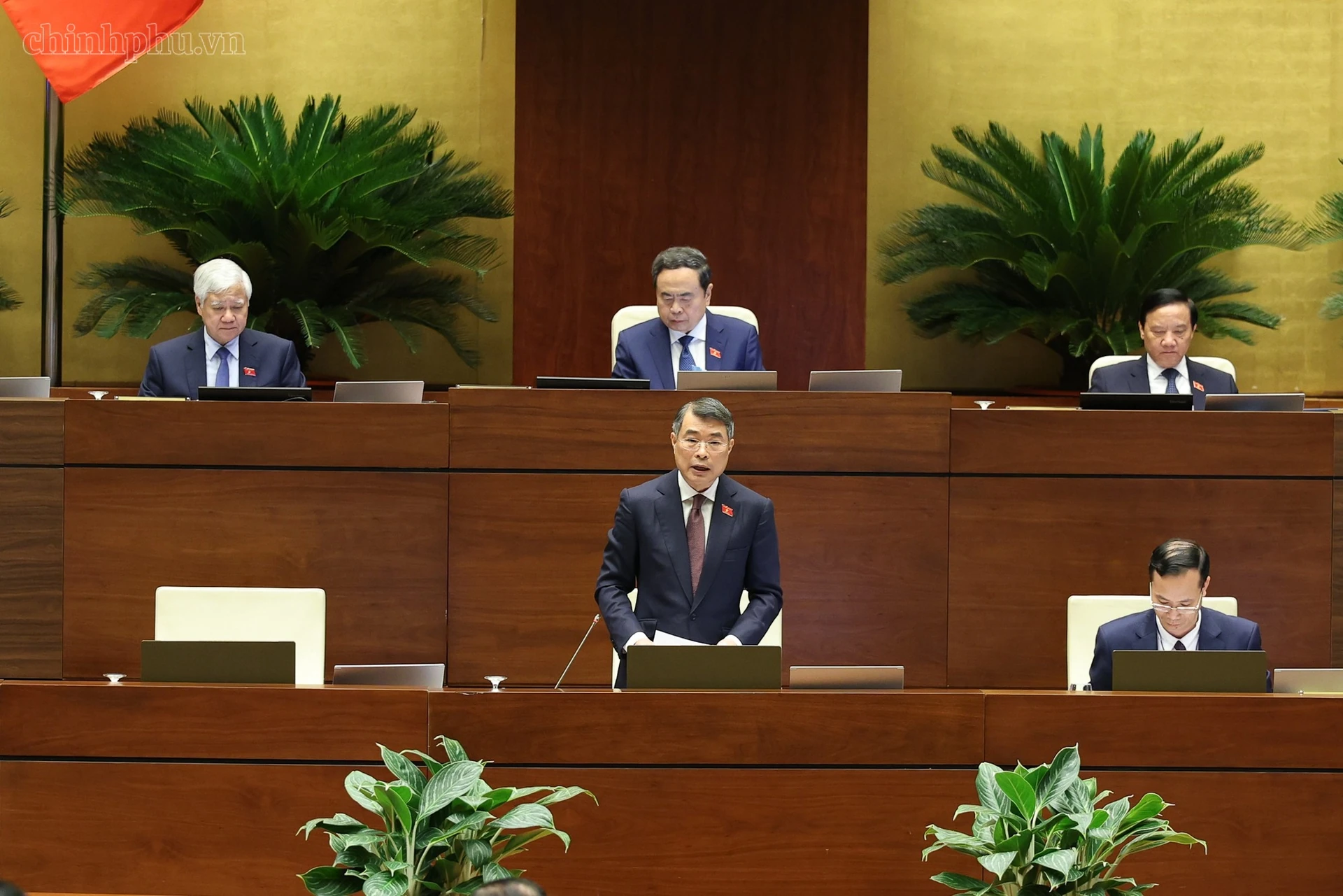
Vietnam’s government will strive for economic growth above 10% in 2026 while keeping inflation around 4.5%, Prime Minister Le Minh Hung said in a report to the National Assembly on November 12. These are full-year policy targets, not final results.
In the report published by the government portal, the prime minister paired macroeconomic and currency stability with efforts to mobilize resources for growth. He acknowledged that challenges and difficulties raised by lawmakers remained.
Ten-month figures and price policy
The report put average consumer price inflation for the first ten months at 4.57% from a year earlier. It listed cost-reduction measures including a value-added tax reduction for eligible goods and services, lower electricity prices and guidance on income tax reductions for eligible businesses.
Tax exemptions and reductions were expected to reduce state revenue by approximately VND 256.7 trillion in 2026, according to the report. That is an estimate rather than a final year-end budget figure.
State budget revenue for the first ten months was estimated at VND 2.44 quadrillion, nearly 96.4% of the annual estimate and 11% higher than a year earlier. Public investment disbursement reached almost VND 708.6 trillion, or 74.1% of the plan, the report said.
Financing the following year
Registered foreign direct investment reached USD 54.85 billion during the ten months, while realized investment was USD 24.08 billion. From a year earlier, registered investment rose 74% and realized investment rose 13.1%.
For 2027, the government put the required total investment at about 36–38% of GDP, equivalent to VND 6–6.4 quadrillion. The report discussed funding from the budget, bonds, credit, private investment and overseas sources.
The prime minister also described plans to prepare growth scenarios, assign responsibilities and monitor supplies of energy and essential goods. The measures remain work to be carried out.