
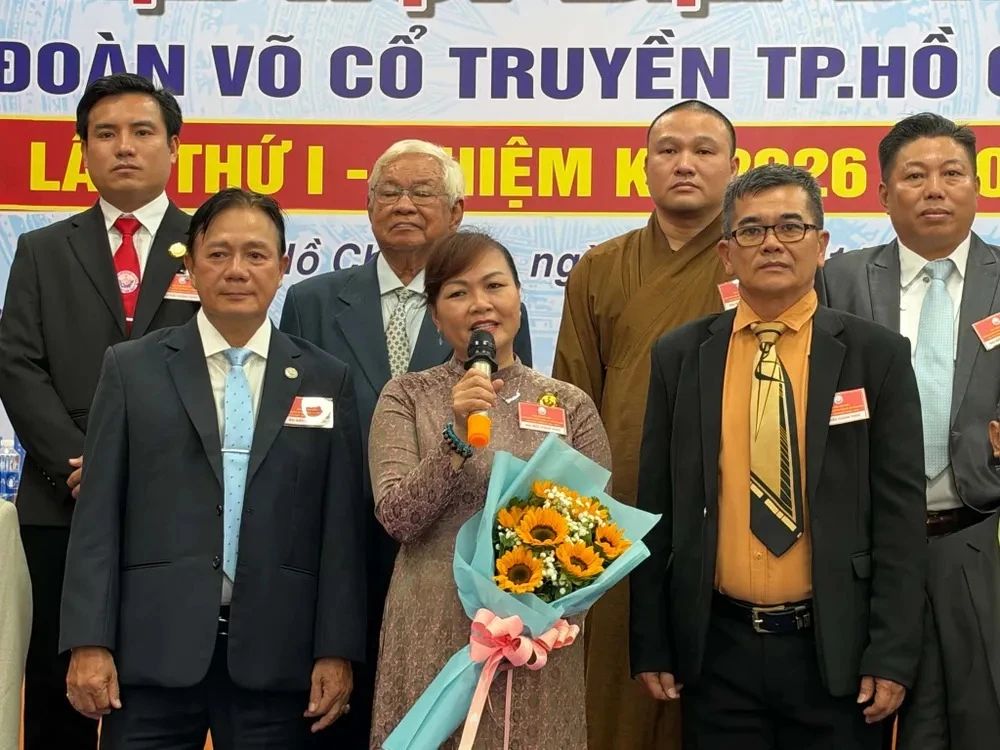
Hà Thị Yến Oanh has been selected to chair the Ho Chi Minh City Traditional Martial Arts Federation for 2026-31 after its congress on November 7. Delegates also elected a 30-member executive board, Sài Gòn Giải Phóng and VTV reported.
The meeting at the city's sports services centre was attended by 174 of 243 delegates called, or 71.6%. It was the organisation's first congress in the period following a merger; it was not Oanh's first time as chair.
A new organisation after the merger
Sài Gòn Giải Phóng reported that Oanh had previously been elected chair of the city federation on August 30, 2024. After the latest congress, the executive board held its first meeting to select a standing committee, chair, vice-chairs and secretary-general. The inspection committee also elected its officers.
Oanh said the congress was tasked with assessing the results and shortcomings of the three federations before their merger and setting a direction suited to the city's new boundaries. After her selection, she pledged to work with the board on its responsibilities for the new term.
Nguyễn Nam Nhân, deputy director of the city Department of Culture and Sports, acknowledged the contributions of generations of martial arts masters, organisations and individuals. VTV reported that the department would coordinate support for the federation's activities under its charter and regulations.
Participation and training targets
VTV said the congress adopted a target of increasing the number of official member organisations that are traditional martial arts clubs in wards and communes by 30%, while also seeking to establish clubs in schools. These are goals for the term, not completed results.
The federation also plans to organise or co-organise at least five competitions, performances, festivals or exchanges a year. It aims to run at least two annual training courses and have more than 85% of the masters, coaches and referees under its management receive planned professional development.
Oanh described participation, competitive performance, cultural promotion and connections between schools and members as priorities. VTV also reported plans to preserve traditional forms, weapons and techniques and gradually build a database of members and practitioners.