
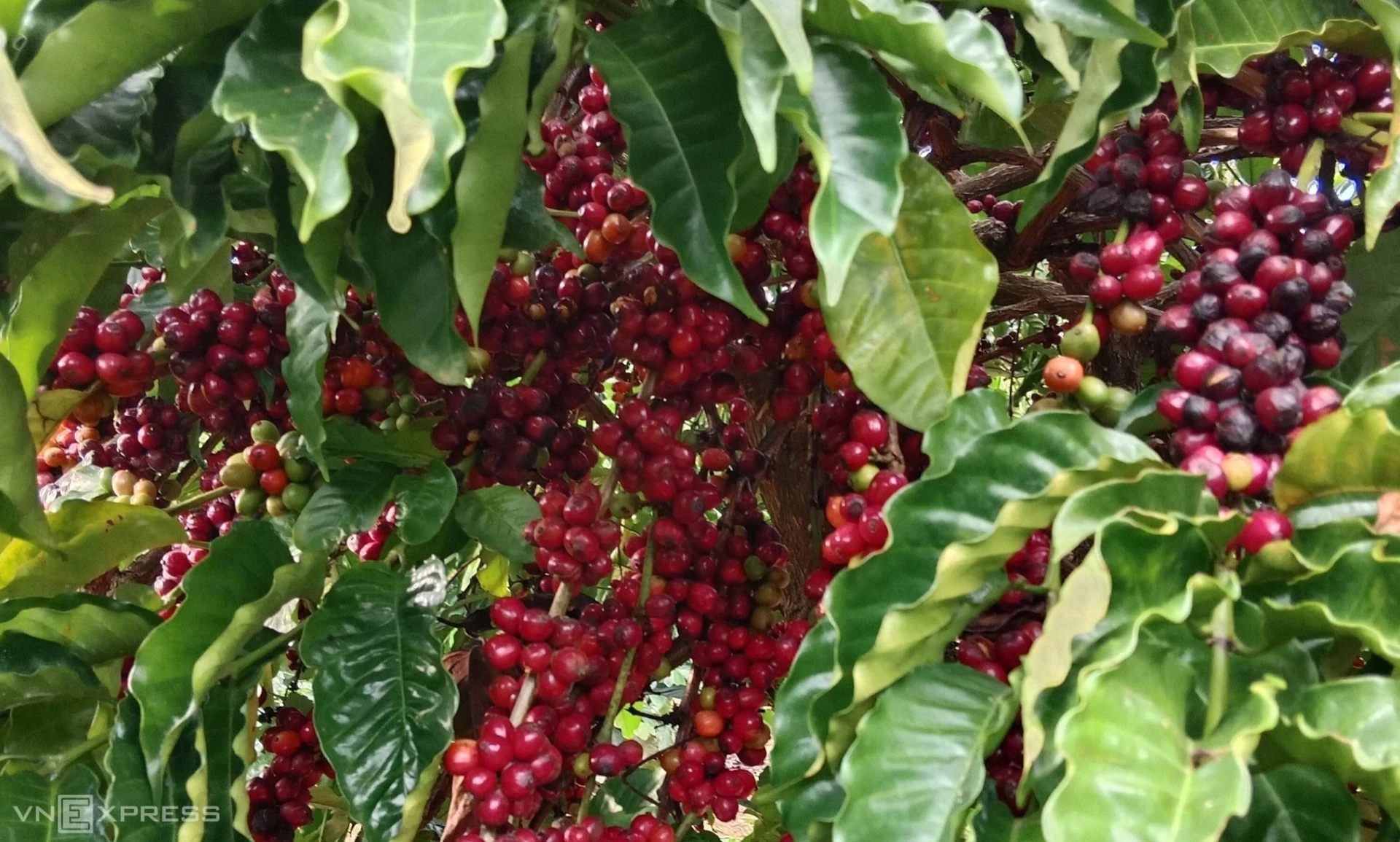
Coffee prices in the main growing provinces of Dak Lak and Lam Dong have fallen for 8 consecutive sessions to below 90,000 dong per kg, VnExpress reported. On the morning of 28 October, prices edged up 200 dong to 88,500 dong per kg, still about 15% below the August rebound to 104,000 dong and 35% below the March peak. Having lost more than 15,000 dong since August, domestic coffee is back at its lowest level since the start of 2026.
Domestic and world prices on the morning of 28 October
| Market | Price | Change |
|---|---|---|
| Domestic (Dak Lak, Lam Dong) | 88,500 dong per kg | Up 200 dong |
| Arabica for December 2026 delivery, New York | 293.75 US cents per pound | Down 2.39% |
| Robusta for November 2026 delivery, London | 3,240 USD per tonne | Up 1.44% |
On world exchanges, the two main coffee types moved in opposite directions that morning, with arabica lower and robusta higher.
Why prices are falling: ample supply
Nguyen Nam Hai, chairman of the Vietnam Coffee and Cocoa Association (Vicofa), said the 2026-2027 crop will enter its main harvest from November, bringing fresh supply to the market. After nearly three years of high prices, farmers in many producing countries have invested more in their trees, expanded planted areas and improved yields.
Forecasts from the US Department of Agriculture (USDA), cited by VnExpress, also point to a big increase in supply:
| 2026-2027 crop year | USDA forecast |
|---|---|
| World output | Record 189.7 million 60-kg bags, up 10.8 million bags |
| World consumption | 179.7 million bags, up 3.6% |
| Brazil | 71.9 million bags, up 8.9 million bags |
| Of which Brazilian arabica | 47.5 million bags |
| Vietnam | 32.5 million bags, up from the previous crop |
Output is expected to exceed demand by nearly 10 million bags, raising the risk of a surplus and weighing on prices. Brazil and Vietnam are the main contributors to the increase. Brazilian arabica output is recovering thanks to favourable rain during flowering, after five consecutive years of falling yields. Ethiopia and Uganda are also forecast to produce more, partly offsetting declines in India and Indonesia.
What it means for Vietnamese growers and exporters
For Vietnamese farmers, the new crop enters its main harvest in November just as domestic prices sit about 15% below August and 35% below the March peak. On the export side, Vicofa expects the volume of Vietnamese coffee exports in 2026 to rise 8-10% from 2025, while the USDA forecasts Vietnamese output of 32.5 million bags in 2026-2027, up from the previous crop. Supply from Vietnam is therefore part of the surplus picture the USDA describes.
What comes next
According to Vicofa, more supply will reach the market as the 2026-2027 crop enters its main harvest from November. The surplus of nearly 10 million bags the USDA forecasts for the crop year is the main source of pressure on prices, while robusta and arabica continue to move in different directions on international exchanges.