
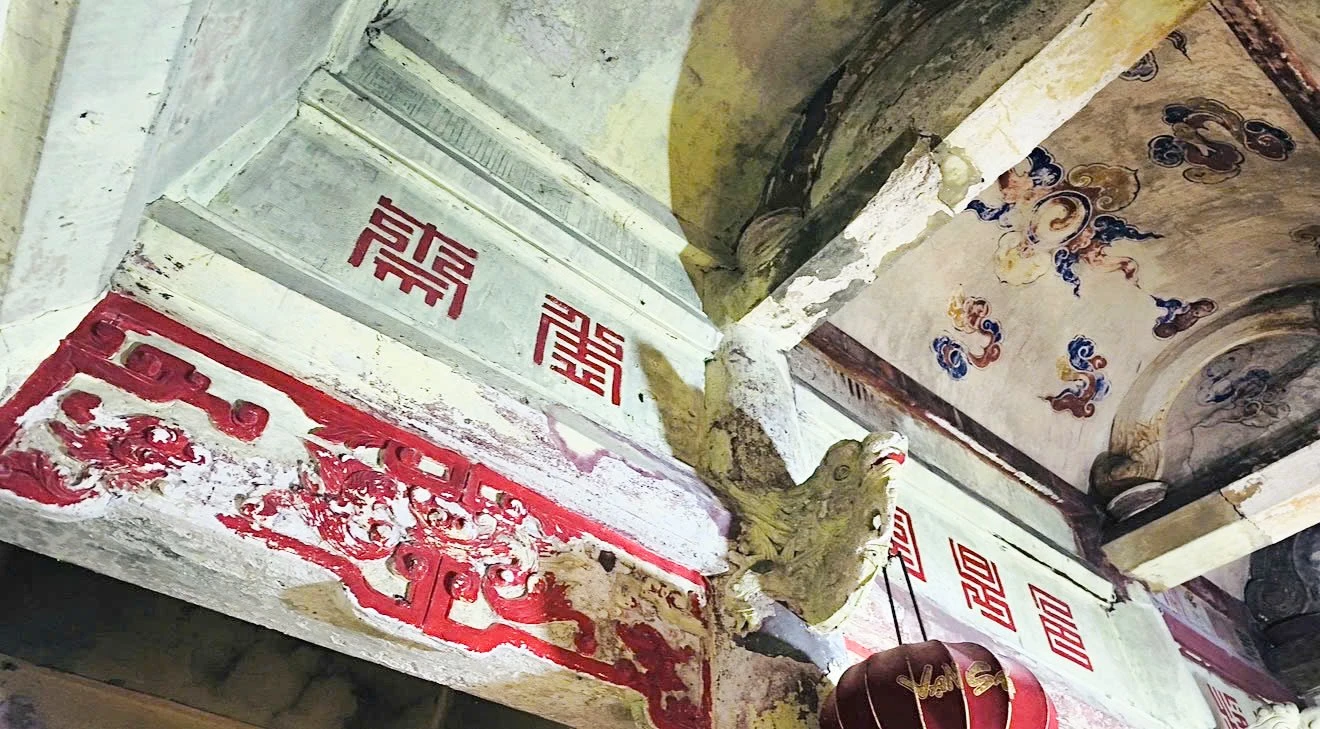
Archaeological traces and objects have been found during construction and landscaping at Phật Quang Pagoda, also known as Chùa Mốc, in Văn Sơn village, Thạch Khê commune, Hà Tĩnh province. Commune chairman Trần Quang Hưng described the discovery on 21 November, according to Báo Văn Hóa.
The local administration is working with specialists to survey and assess the site and prepare for archaeological excavation. The report describes preliminary findings; it does not say that a full excavation has been completed.
Several periods, preliminary dating
The newspaper cites an initial survey by the University of Social Sciences and Humanities, Vietnam National University, Hanoi, which identified material tentatively associated with several periods: approximately the second to first centuries BCE, the Trần dynasty in the 13th and 14th centuries, and the 17th and 18th centuries. These are preliminary assessments of groups of material, not a confirmed construction date for the whole pagoda.
The finds include decorative bricks, tiles and building materials with characteristics associated with the Trần period. The report says they suggest the possibility of a sizeable structure at the site. Its scale, purpose and relationship to other layers still require research; the materials alone do not establish a complete reconstruction or history.
The report does not specify counts for each object type, detailed laboratory results or dating methods. The dates therefore remain attributed to the preliminary survey.
Preparing the next stage
Hà Tĩnh Museum, the university team and the commune authorities are discussing cooperation and preparations for further archaeological work. Recording where material is found and its relationship to surrounding layers will matter to the interpretation. The report does not give an excavation timetable.
The discovery offers a new line of inquiry into local history, culture and religious life, but more specific conclusions must await specialist work and further announcements.
KBVN+ previously covered a national archaeology conference presenting nearly 400 studies, including discussion of archaeological context. Separately, an exhibition in Đà Nẵng presents shipwreck ceramics.