
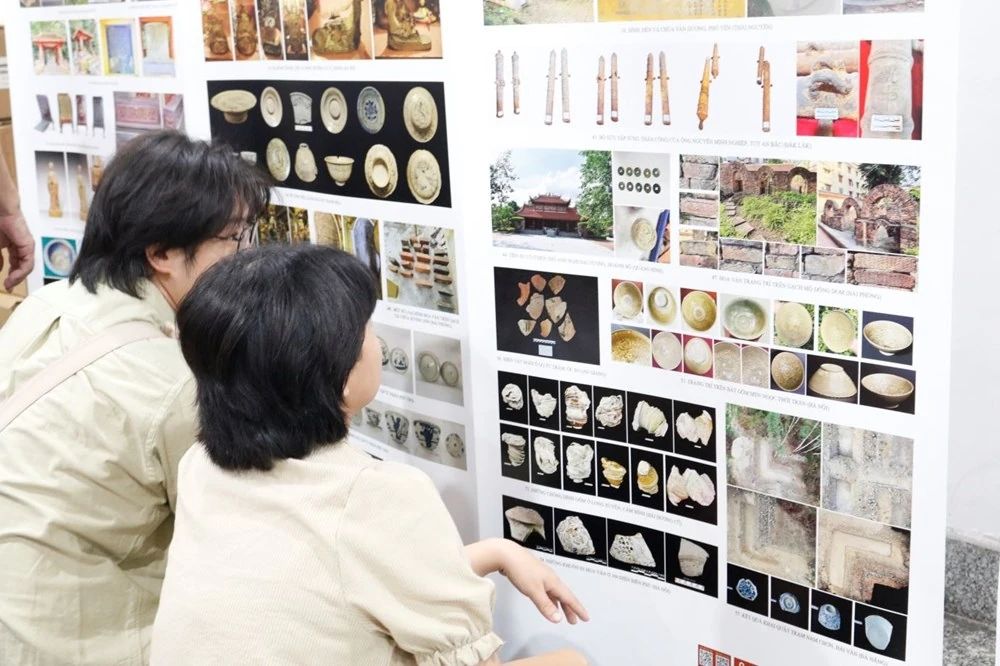
Vietnam's sixty-first national conference on new archaeological discoveries took place in Hanoi on October 15–16, bringing together nearly 400 papers. Bao Van Hoa reported that discussions covered five fields, from prehistoric archaeology to underwater research.
The programme reviewed findings reported during 2026. It did not mean every excavation or discovery occurred during the two conference days; some material came from earlier fieldwork.
Evidence from historic sites
At Kinh Thien Palace within the Thang Long Imperial Citadel, the 2026 excavation covered 910 square metres. Researchers further identified Le-period foundations and courtyards, alongside remains associated with the Nguyen-period Long Thien palace.
A cultural sequence approximately six metres thick contains material from Dai La through modern times, supporting research into changes in the historic political centre.
Other presentations covered Nam Giao in Thanh Hoa, LiDAR survey work at Hoa Lu and coastal defensive remains in Da Nang. Chap Khe tomb in Quang Ninh, excavated in December 2025, yielded 2,673 objects. Its proposed early-second-century dating remains preliminary.
Preserving archaeological context
Underwater studies included the Ha Man ancient boat, the Cu Lao Cham wreck and wooden piles near Kiep Bac temple. Further dating and structural analysis are needed to clarify their functions and historical connections.
Methods discussed included radiocarbon dating, pollen and material analysis, geographic information systems and three-dimensional modelling.
Archaeology Institute deputy director Do Truong Giang emphasised that excavated context cannot be recreated in its original form. Fieldwork must therefore be matched by documentation, conservation, storage, analysis and publication capacity so that discoveries retain their scientific value.