
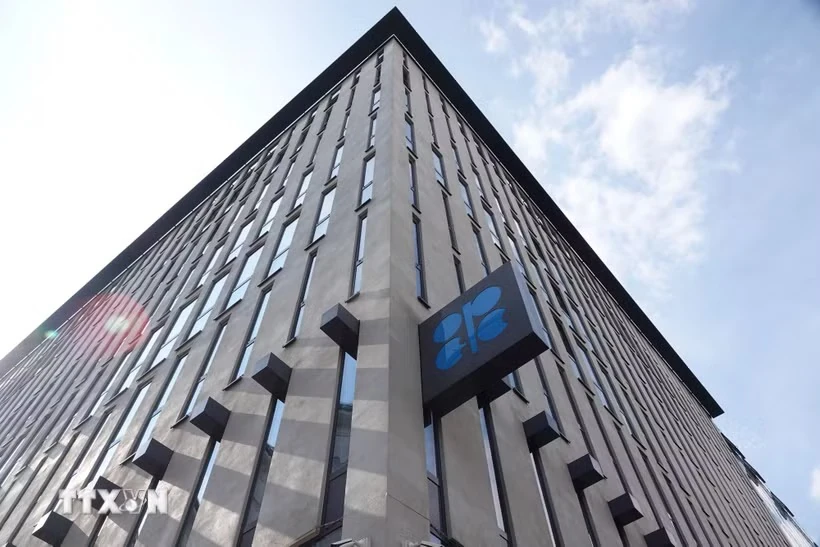
OPEC+ is likely to leave its oil production targets for December 2026 unchanged when it meets online on the weekend of 31 October and 1 November, VietnamPlus reported, citing people familiar with the matter. In the markets, oil prices fell about 1% on 27 October on hopes that tension in the Middle East would ease, and gold lost ground as the US dollar firmed before the Federal Reserve's policy meeting.
OPEC+ looks beyond the fourth quarter
Seven core members are due to take part: Saudi Arabia, Russia, Iraq, Kuwait, Algeria, Kazakhstan and Oman. Keeping targets steady would fit the group's stance of leaving production policy alone until 2027. Most members are already pumping below their quotas, even as Gulf producers try to rebuild exports disrupted by the war in Iran.
Analysts cited by VietnamPlus expect no quota changes in the fourth quarter of 2026, with the focus moving to negotiations over 2027. First, the group has to finish reviewing each member's actual production capacity. That review sets new baselines for allocating quotas and a timetable for phasing out the remaining cuts.
The cuts so far, as VietnamPlus lays them out:
- 2023: members agree a voluntary cut of 1.65 million barrels a day.
- September 2026: OPEC+ completes the return of that volume.
- Now: a separate cut of about 2 million barrels a day, involving most members, runs until the end of 2026.
Oil eases on Tehran talks, but supply stays tight
In afternoon trading on 27 October, Brent futures fell $1, or 0.86%, to $114.81 a barrel, and US West Texas Intermediate (WTI) lost 88 cents, also 0.86%, to $100.88, according to a separate VietnamPlus report. The trigger was talks in Tehran on 26 October between envoys from Saudi Arabia, Turkey and Pakistan and Iranian officials. Iranian state media said the four countries agreed to keep up a dialogue on peace and security.
Sugandha Sachdeva, founder of New Delhi research firm SS WealthStreet, described the move as profit-taking after a climb to multi-month highs. Brent topped $117 last week, its highest since April, after Iranian attacks on tankers around the Strait of Hormuz. She still sees prices staying high because of prolonged geopolitical uncertainty.
The risks have not gone away. Iran-backed Houthi forces have resumed attacks on Saudi Arabia, and ANZ Research noted that Gulf crude exports have fallen for a fourth straight week, flows through Hormuz are running at about 60% of normal and global stocks of distillates such as diesel and heating oil are nearly 5% below their five-year average.
Gold under pressure from the dollar
At 05:30 GMT (12:30 Vietnam time) on 27 October, spot gold was down 0.3% at $4,003.59 an ounce and US gold futures for December 2026 were 0.5% lower at $4,016.10, VietnamPlus reported. With the dollar near a two-week high, bullion costs more for buyers using other currencies. Last week gold fell below $4,000 for the first time since mid-July 2026 and ended down 4%, its steepest weekly drop in about four months, as high energy prices fed inflation worries and bets on further Fed rate rises.
Ilya Spivak, head of global macro analysis at Tastylive, said gold was consolidating within its 23 October trading range; a break below $3,900 could bring a much deeper fall, possibly back to $3,800. In Hanoi, Saigon Jewelry Company listed SJC gold at 139 million dong per tael (buying) and 142.02 million dong (selling) on the afternoon of 27 October.
Prices on 27 October
| Commodity | Price | Change |
|---|---|---|
| Brent futures | $114.81 a barrel | Down 0.86% |
| WTI | $100.88 a barrel | Down 0.86% |
| Spot gold | $4,003.59 an ounce | Down 0.3% |
| US gold futures (December) | $4,016.10 an ounce | Down 0.5% |
| Spot silver | $53.06 an ounce | Down 1.6% |
| Platinum | $1,506.94 an ounce | Down 1.3% |
| Palladium | $1,030.75 an ounce | Down 1.8% |
Compiled from VietnamPlus reports of 27 October: oil prices are from afternoon trading, spot gold and gold futures from 05:30 GMT.
What to watch
- 28 October: the Fed's policy decision. Fed officials have signalled no rate rise at this meeting, though investors doubt the pause can last. CME Group's FedWatch tool puts the chance of a hike this time at about 11%, against 82% for December.
- 29 October: the personal consumption expenditures (PCE) price index, the inflation gauge the Fed watches most closely as it aims to bring inflation back to 2%.
- Weekend of 31 October and 1 November: OPEC+ meets online on December output targets.
- After that: negotiations on 2027 production policy, based on the reviews of each member's capacity.