
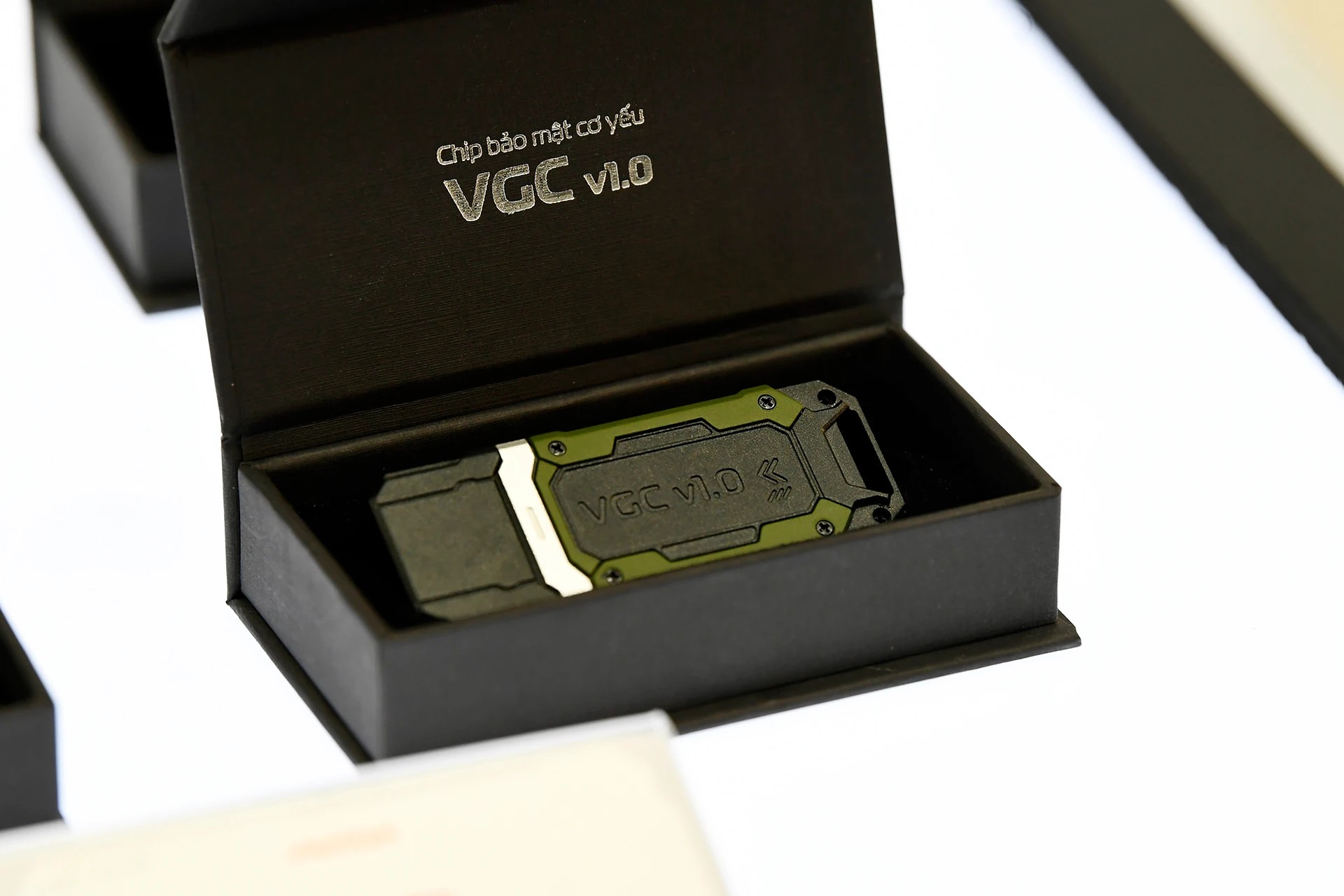
Viettel and Vietnam’s Government Cipher Committee have developed the VGC v1.0 security chip and a design platform intended to support future generations of chips. Government News describes VGC v1.0 as the first product built on that platform.
A chip and reusable components
The platform comprises a base design, a library of security functions and a standardised testing process, the report says. Reusable components include a processor, encryption and key-generation blocks and a secure-boot mechanism. The aim is to avoid rebuilding every basic element for each subsequent product.
The design uses RISC-V, an open instruction-set architecture. Viettel engineers designed the processor around the required functions and incorporated the cipher committee’s cryptographic algorithms, according to the report. RISC-V refers to an instruction-set architecture, while VGC v1.0 is the particular chip.
The development team expects reuse to shorten future design work. That is a projection, not a measured saving on a completed successor.
Testing and the next stage
The report describes a 10-by-10-millimetre package containing approximately 300 million transistors, manufactured using a 28-nanometre CMOS process. It cites testing that put encryption and decryption at about 15 times the speed of a software-only solution on the same task.
According to Government News, the first chip batch passed technical tests in the first quarter of 2026 and received certification for socioeconomic use. Viettel and the cipher committee signed an agreement covering series production and a multicore security-chip platform. That agreement is a next step; it does not establish that large-scale commercial deployment has occurred.
Possible applications cited include financial data, connected devices and essential infrastructure. Individual deployments remain to be developed and confirmed.