
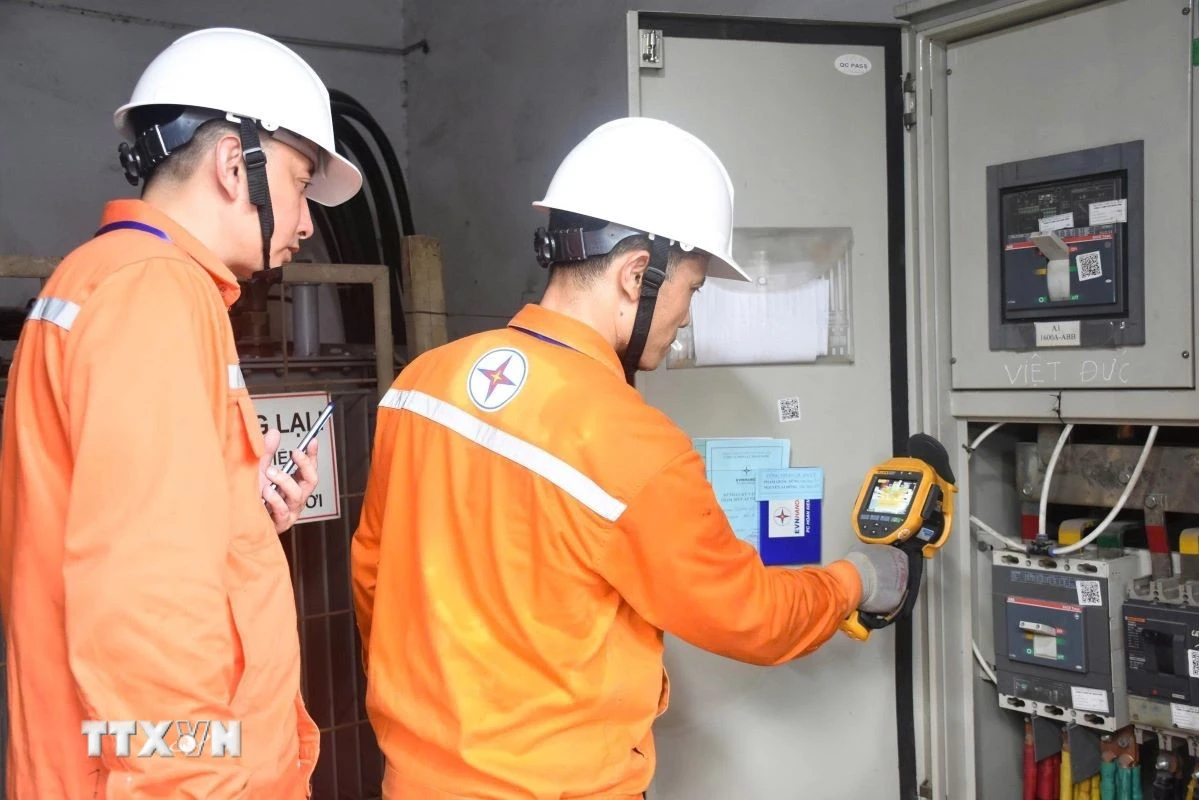
Vietnam Electricity (EVN) lowered the average retail electricity price by 2% to 2,159.9037 dong per kWh, excluding value-added tax, with effect from 1 November 2026, under a decision dated 30 October. The cut applies to all customer groups. VietnamPlus said it is the first reduction in the average retail price in about 20 years, not counting temporary bill relief during the Covid-19 pandemic. On the same day, the special consumption tax on petrol was cut to 0%.
Why now
The move comes as inflation runs slightly above target. Average consumer prices rose 4.52% in the first nine months against a full-year goal of about 4.5%, VnExpress reported, driven mainly by oil prices that stayed above $110 a barrel in the third quarter amid conflict in the Middle East. Vietnam is also chasing growth of 10% or more this year, leaving little room on inflation.
EVN deputy general director Nguyen Dinh Phuoc told VietnamPlus the cut showed the utility's readiness to support macroeconomic stability and social welfare. Existing subsidies for poor and social-policy households under Prime Ministerial Decision 14/2025/QD-TTg, equivalent to 30 kWh a month at the first-tier price, remain in place.
Estimated impact
KBVN+ compiled estimates from several sources:
| Measure | Estimate | Source |
|---|---|---|
| Consumer price index | About 0.08% lower | General Statistics Office, via VietnamPlus |
| CPI, direct / second-round effect | About 0.066 / over 0.13 of a percentage point lower | Nguyen Tien Thoa, via VietnamPlus and VnExpress |
| Inflation room from power cut plus petrol tax cut | About 0.07 of a percentage point | Deputy PM Nguyen Van Thang, via VnExpress |
| Production costs for steel, textiles, cement | About 0.12-0.3% lower | Nguyen Tien Thoa, via VnExpress |
| Household using about 400 kWh a month | Saves nearly 20,000 dong a month | Nguyen Tien Thoa, via VietnamPlus |
The estimates use different methods and are indicative only. According to Nguyen Thu Oanh of the statistics office, household electricity carries a 4.81% weight in the CPI basket; its price index rose 4.35% on average in the first nine months, contributing about 0.21 of a percentage point to overall inflation of 4.52%, VnExpress reported.
For families the savings are small. A Hanoi resident told VietnamPlus her bill of more than 1 million dong a month would fall by only about 10,000 dong, though she welcomed any cut. Economist Ngo Tri Long noted that a lower average price does not mean every bill falls by the same proportion. Economist Nguyen Minh Phong warned that lower costs will not automatically be passed on to consumers, and urged a faster process for price cuts.
Timeline
- 27 October: the Deputy Prime Minister asked for a review of power prices and the petrol tax (earlier KBVN+ report).
- 30 October: EVN issued Decision 1305/QD-EVN; Deputy PM Nguyen Van Thang outlined the inflation room from both measures at a socio-economic debate.
- 31 October: the Ministry of Industry and Trade issued Decision 2892/QD-BCT setting prices by customer group; EVN announced the cut that evening.
- 1 November: new prices took effect.
- 31 March 2027: the power price and petrol tax cuts are due to end, according to VnExpress.
What comes next
The reduced price will apply until 31 March 2027, according to VnExpress. The Finance Ministry is working with 2026 inflation scenarios of 4.5% and 4.8%, while the central bank expects about 4.5-5%. Analysts caution that power prices can still rise again if input costs climb.