
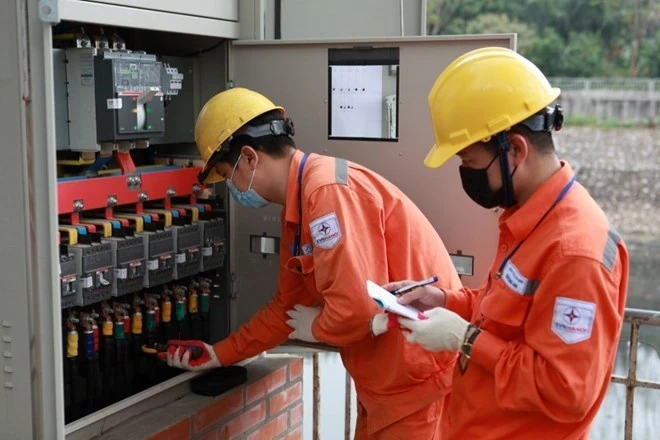
Vietnam's government has ordered work on a cut to the average retail price of electricity and a review of scrapping the special consumption tax on petrol, with both measures meant to run from 1 November 2026 to 31 March 2027. Deputy Prime Minister Nguyen Van Thang gave the instructions on 27 October 2026 at a government meeting on fuel and power price scenarios, according to Báo Chính phủ, the government's online newspaper.
Neither step is final. The meeting's conclusions put no figure on the electricity cut, and the tax plan must still pass a legal and feasibility review.
Who has to do what
- EVN, the state utility, must review its costs, save as much as it can and draw up a lower average retail price that follows the rules on how and when that price may change, then send it to the Ministry of Industry and Trade.
- The Ministry of Industry and Trade must give its view on EVN's plan in time for a cut from 1 November 2026 and refer anything beyond its powers to higher authorities.
- The Ministry of Finance, working with the industry and justice ministries, must check the legal basis, impact and feasibility of a 0% rate on all petrol and report to the competent authorities before 1 November 2026.
Where power prices and fuel taxes stand
According to VnExpress, the average retail electricity price is just over 2,204 dong/kWh before VAT and has not changed since 10 May 2025. Households pay on a six-tier scale, from 1,984 dong/kWh for the first 50 kWh to 3,460 dong/kWh above 400 kWh a month.
EVN's 2025 cost review put its total production and business costs at more than 601,680 billion dong, about 2,092 dong/kWh, or roughly 5.3% below the current average price. EVN also says more than 17,506 billion dong of costs, mostly exchange-rate differences, had not been booked into its costs by the end of 2025.
The rules VnExpress describes split the decision by the size of the calculated change:
| Calculated change | What happens |
|---|---|
| Fall under 1% or rise under 2% | No change; EVN reports to the industry ministry |
| Fall of 1% or more, or rise of 2% to under 5% | EVN submits a plan; the ministry reviews it first |
| Rise of 5% to under 10% | The industry ministry approves |
| Rise above 10% | The government decides |
For petrol, the Special Consumption Tax Law in force since 1 July sets these rates:
| Fuel | Current rate | Rate under review |
|---|---|---|
| Regular petrol | 10% | 0% |
| E5 petrol | 8% | 0% |
| E10 petrol | 7% | 0% |
The tax was already cut to 0% from late March to the end of June 2026. Environmental protection tax on fuel stays at 0 dong per litre, and under a policy extended to the end of 2026, fuel is not subject to VAT declaration and payment.
What comes next
The deadline is 1 November 2026: the finance ministry must finish its review by then, and the industry ministry must sign off on EVN's figure so the power cut can start that day. If approved, both measures will last until 31 March 2027, and households will only know how much their bills fall once EVN's price is set.