
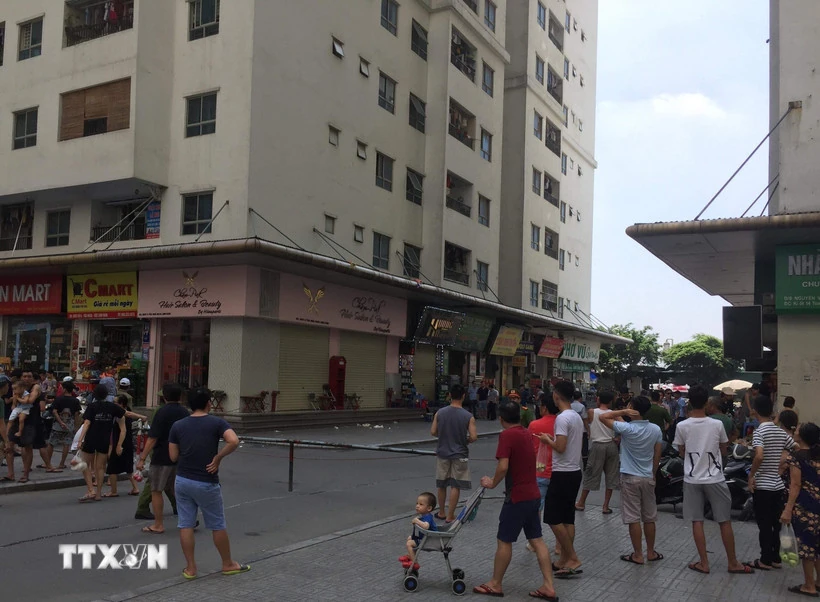
The Hà Nội People's Council on 28 October passed a resolution setting out special mechanisms, policies and remedial measures to resolve land and construction violations, combined with urban upgrading, at 12 projects linked to Mường Thanh Group, VietnamPlus reported. The council adopted it at the seventh session of its 17th term.
The resolution implements Clause 2, Article 8 and Clause 4, Article 14 of Capital Law No. 02/2026/QH16. Its aims are to settle long-running violations once and for all, protect the lawful rights of homebuyers and add essential infrastructure to the areas concerned.
Scale of the violations
The 12 projects are CT6 Kiến Hưng in Kiến Hưng ward; the Đại Thanh mixed-use project in Đại Thanh commune; CT5 Tân Triều and the Xa La housing area in Hà Đông ward; the CT11, CT12 housing project on plot CT2 of the Kim Văn - Kim Lũ urban area in Định Công ward; and VP3, VP5, VP6 plus the HH1, HH2, HH3 and HH4 apartment and commercial complexes in Linh Đàm, Hoàng Liệt ward.
According to the Hà Nội People's Committee, the developers built outside approved plans, added floor space, split flats and increased their number, pushing up the population and straining local infrastructure. Inspectors had identified violations in investment, land, planning and construction, but these were never fully resolved.
| Item | Number of flats |
|---|---|
| Under plans or building permits | 6,759 |
| Actually built | 24,943 |
| Excess | 18,184 |
That means the projects hold about 3.7 times as many flats as permitted. VietnamPlus said the problems have hurt residents' quality of life, held up the issuing of land use and property ownership certificates, and led to protracted complaints.
Conditional retention or demolition
Each project must be reviewed for its legal documents, current condition, planning, land, construction, fire safety and infrastructure capacity. The resolution states that the special mechanism does not change the nature of the violations or annul inspection conclusions, court rulings or enforcement decisions already issued by the authorities.
High-rise buildings may remain, subject to conditions, only if they are complete and in use; structurally safe and compliant on fire safety and rescue; harmless to neighbouring buildings; compliant on spacing between towers; and clear of road boundary lines and protection corridors. They must also meet minimum standards for water, power, parking, kindergartens, primary and lower secondary schools and community space; where infrastructure falls short, a remedial plan judged feasible is required.
Buildings that fail the conditions must be demolished. In buildings allowed to remain, violating space in podiums, technical floors and community areas must be vacated by residents so it can return to its planned use or be converted to a suitable public use.
For buildings that remain, developers must surrender illegal gains, calculated as the excess floor area multiplied by the per-square-metre construction cost based on investment rates when the building entered use, then multiplied by 50%. Land-related financial obligations are based on the city's land price table at the time the building or project entered use.
What homebuyers get
- Lawful buyers who were not at fault bear none of the costs or losses from the developer's remedial work. Compensation and support for those relocated take priority over the developer's payment of illegal gains and land obligations.
- Buyers who must move receive compensation from the developer and hand over their homes within 90 days of being paid in full; prices are set by a valuation council or by decisions and court rulings of the authorities.
- Those relocated get priority to buy homes in projects run by the developer and may stay in place until demolition or conversion is announced. Those eligible for social housing can buy or lease-purchase it at the developer's projects without a lottery.
- Residents whose only income comes from businesses in podium space being converted receive one-off support equal to six months of the regional minimum wage.
- Buyers who do not have to move keep their contract rights and receive certificates once they have met their financial obligations and the developer has met its land obligations.
The state budget will not pay for anything that is the developer's responsibility unless the law provides otherwise. If a developer fails to act, the city will draw on its guarantee funds or order enforcement against its assets; enforcement against residents who refuse to move can only be considered after the developer has fully paid compensation and support.
Timeline
According to VietnamPlus reports:
| Date | Development |
|---|---|
| 17 August 2026 | The Hà Nội People's Procuracy issues an indictment charging Lê Thanh Thản, chairman of Mường Thanh Group, with deceiving customers |
| 12 October 2026 | The Hà Nội People's Committee seeks comments on the draft resolution for the 12 projects linked to Lê Thanh Thản |
| 27 October 2026 | Hà Nội submits the mechanism for handling violations at the 12 projects |
| 28 October 2026 | The People's Council passes the resolution |
What comes next
Dương Đức Tuấn, standing vice chairman of the Hà Nội People's Committee, said the city will draw up 12 remedial plans, one for each project, with city departments guiding and supporting local authorities. The People's Committee will decide which buildings and areas may remain conditionally and which must be demolished, renovated or converted, and how infrastructure will be added.
Before any relocation, commune-level authorities and the developer will list the flats and areas affected and identify the owners; relocation plans must be made public and residents' views taken into account. The council's Urban Affairs Committee has asked for a specific assessment of the developers' capacity and resources. The People's Council and the Fatherland Front at all levels will oversee implementation.