
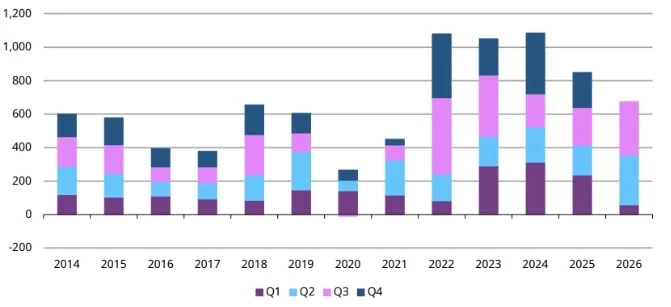
Central banks bought 321 tonnes of gold in the third quarter of 2026, up 42% from a year earlier and the strongest quarterly amount since late 2024. VnExpress, citing Reuters and the World Gold Council’s November 3 report, contrasted that rise with a 1% decline in total demand to 1,369 tonnes.
Quarterly purchases, not a one-day transaction
China and Poland led the reported buying with 63 tonnes and 41 tonnes respectively. Russia’s central bank sold 19 tonnes. These figures describe activity covered by the report rather than purchases made solely on November 3.
Year-to-date central-bank net buying reached 675 tonnes. WGC raised its full-year expectation to at least 848 tonnes, matching the previous year’s amount. Analyst Krishan Gopaul’s view that buying could exceed 2025 remains a forecast, not a completed annual result.
VnExpress also cited WGC’s June reserve survey on officials’ views of gold against inflation, geopolitical and currency risks. Survey opinions do not guarantee a future price outcome.
Demand categories moved differently
Bar-and-coin demand fell 19% to 268 tonnes, while jewellery demand declined 17% to 313 tonnes. Technology demand rose 3%, and gold ETFs added 211 tonnes, reversing the previous quarter’s direction.
Central-bank buying therefore does not describe every part of the market. The next comparison is final-quarter data against WGC’s full-year expectation. Its demand breakdown places stronger central-bank and ETF buying alongside weaker jewellery, bar and coin demand.