
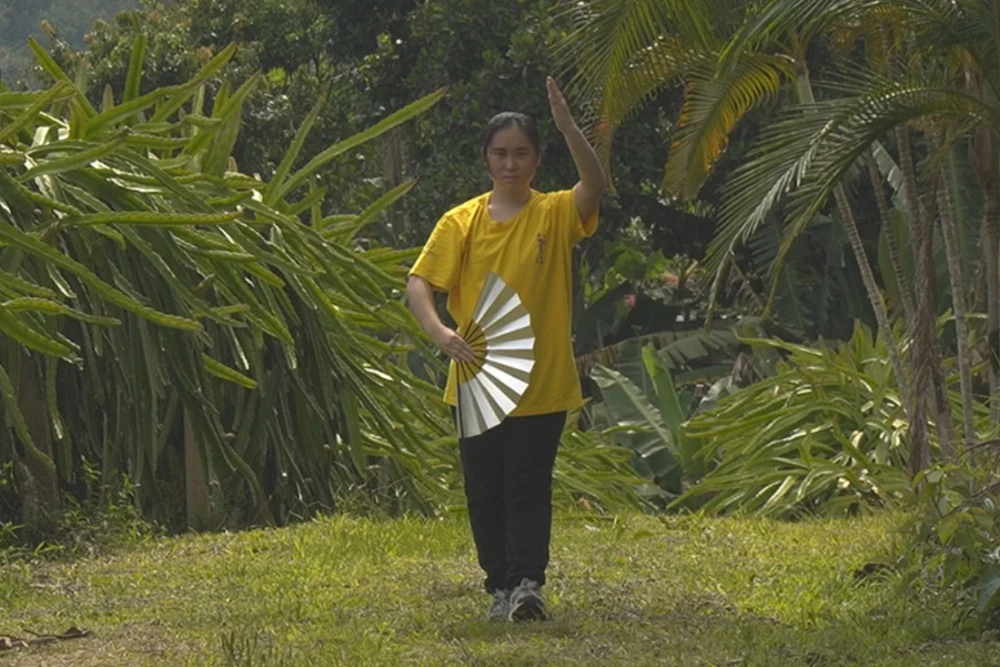
Okinawa Saudade follows two Okinawan Brazilian dancers travelling to Okinawa to explore their cultural roots. Speaking to Variety around its Nippon Cinema Now presentation at the 39th Tokyo International Film Festival, director Matsubayashi Yoju described a project built on roughly a decade of relationships and research.
A documentary growing from an earlier film
His year in Brazil beginning in 2016 introduced him to the wartime forced relocation of Japanese immigrants from Santos. That history became Okinawa/Santos in 2020. Interviews for the earlier documentary also brought him closer to the Okinawan community.
Research at São Paulo's Bunkyo cultural facility exposed him to extensive immigrant records in Japanese and Portuguese. The sheer volume of Okinawan material impressed him alongside its historical contents.
The new film follows Yumi, who dances Ryukyu Buyo, and Everton, an Eisa teacher in Brazil. Matsubayashi also presents himself as part of the inquiry into belonging, rather than an entirely detached observer.
Dance as a changing tradition
He distinguishes Okinawan traditional Eisa from the Creative Eisa developed in Brazil. Having existed there for about 45 years, he argues, the Brazilian form can also be understood as a tradition. Differences in instruments and performance become material for exploring identity.
Brazil's official apology in 2024 and an exchange programme that year belong to the film's historical context, rather than a newly announced policy. Matsubayashi also credits an Okinawa Prefecture grant with enabling post-production amid financial difficulties for documentary work.
The Tokyo presentation brings the documentary to audiences in Nippon Cinema Now. Matsubayashi describes the work as a more subjective approach, using dance and emotion to follow the questions of identity shared by Yumi, Everton and himself.