
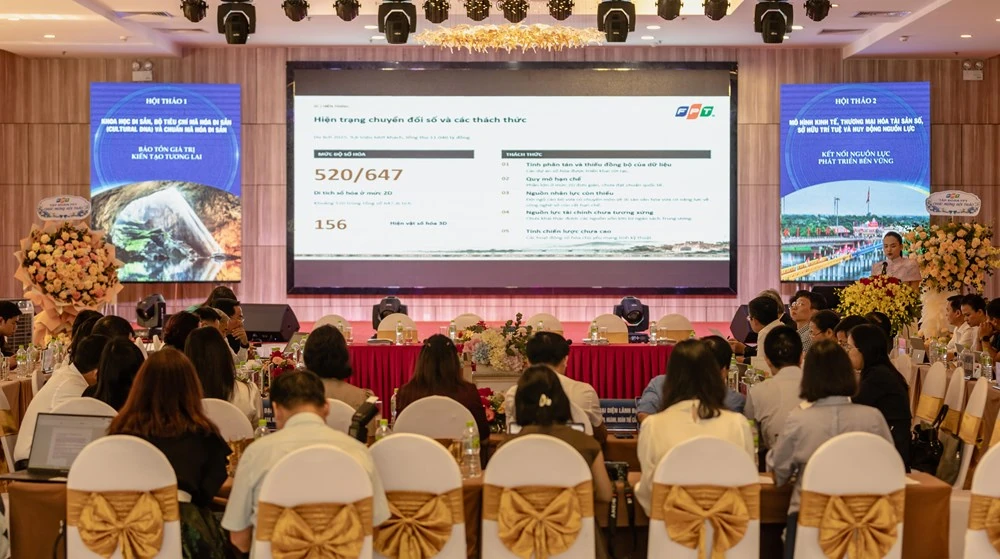
Quang Tri convened a scientific workshop and expert consultation on October 14 to develop the foundations of a digital transformation programme for culture, sports and tourism. Van Hoa reported that shared data standards, historical authenticity and the use of digital heritage were central subjects.
Building a common digital collection
The provincial culture, sports and tourism department brought together specialists in history, archaeology, language, heritage management and technology. Their advice supports a proposed programme for 2026–2035, with a vision extending to 2045.
The report said approximately 520 of 647 monuments had been digitised in two dimensions. Three-dimensional work covered 156 objects and four of five national treasures. Another 36 intangible heritage elements and 29 documentary heritage items had been digitised to varying degrees.
Those figures cover different asset categories and technical stages. They do not mean all provincial heritage has been reconstructed in three dimensions or integrated into one operational platform.
Authenticity and long-term access
Existing data remains fragmented, standards are inconsistent and staffing capacity is limited, according to the workshop account. The proposal aims to create shared digital assets supporting conservation, education, tourism and cultural products.
For monuments shaped by several historical periods, records should preserve their origins, subsequent use and later changes. Technical standards and acceptance criteria also need to enable future connection and reuse.
Participants considered how virtual reality and artificial intelligence reconstructions should distinguish scientific evidence from assumptions or artistic interpretation. Other topics included transcription standards for ethnic minority languages, limits on data supplied to commercial users and the capacity to operate a shared repository while respecting the rights of heritage communities.