
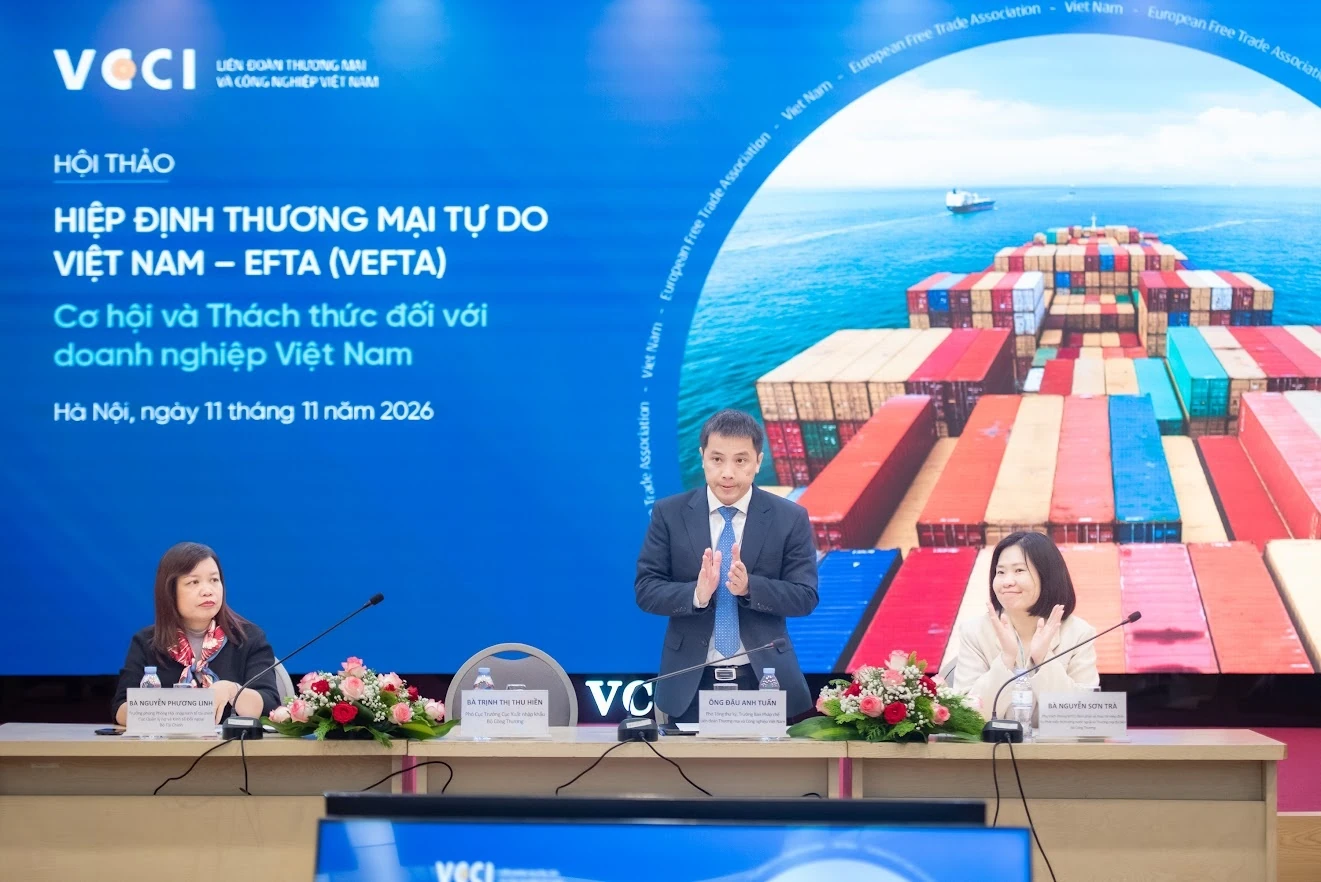
Vietnamese exporters should review their inputs, rules of origin and market-specific standards before the Vietnam–EFTA free trade agreement takes effect, a Hanoi seminar heard on November 11.
The Government Electronic Newspaper reported that Vietnam signed VEFTA on October 18 after 14 years of negotiations. EFTA comprises Switzerland, Norway, Iceland and Liechtenstein. The agreement had been signed but was not yet in force at the time of the seminar.
Tariff commitments have conditions
A Finance Ministry representative said EFTA countries had committed to remove more than 90% of tariff lines when the agreement enters into force, corresponding to around 99.5% of Vietnamese exports to the group. The degree of market opening varies among members.
Vietnam, in turn, committed to liberalise more than 86% of tariff lines on imports from EFTA by the end of the implementation schedule. Reductions are phased over periods ranging from three to 15 years depending on the goods, rather than applied simultaneously to everything.
Customs figures presented at the seminar put two-way trade in 2025 at about $1.92 billion. Vietnam exported around $405 million and imported approximately $1.52 billion. These are previous-year figures that provide context for the agreement.
Documentation and market access
VCCI representative Đậu Anh Tuấn advised businesses to examine the commitments for each market, understand origin rules and prepare supporting documents. Product quality, traceability, environmental standards and social responsibility were also discussed.
The Finance Ministry is preparing a draft decree on Vietnam’s special preferential import tariffs under VEFTA, the seminar was told. Eligibility will depend on the applicable conditions and documentation.
While awaiting entry into force, firms can review product lines, suppliers and distribution partners. The tariff preferences should not be treated as already available before the agreement and relevant conditions apply.