
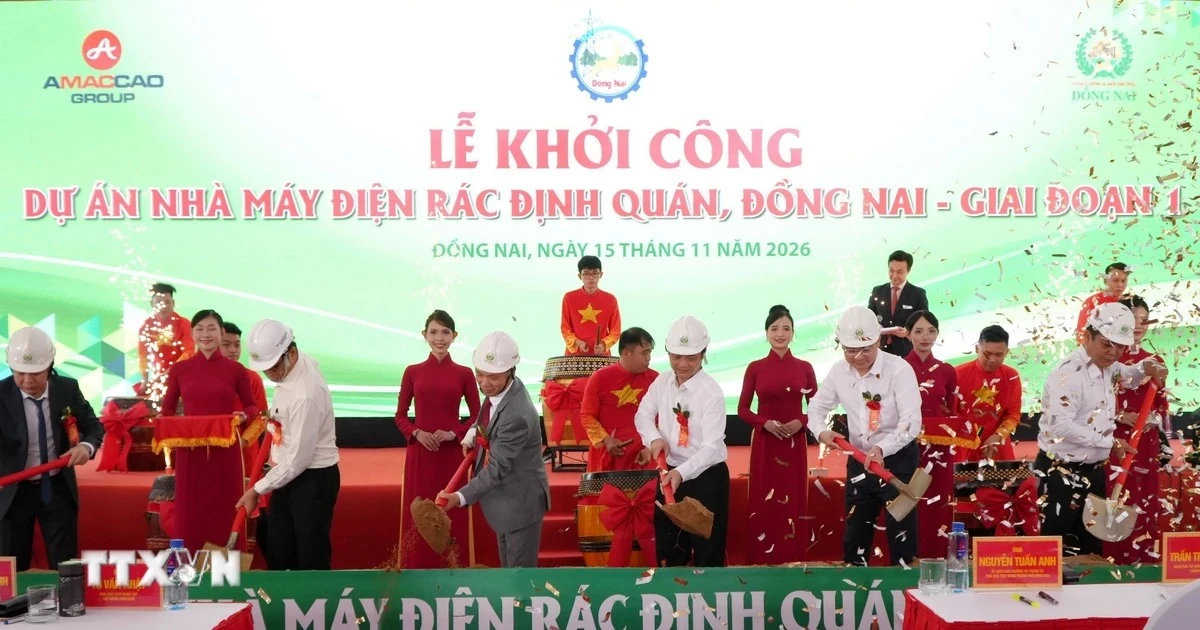
Construction has begun on the first phase of the Định Quán waste-to-energy plant in La Ngà commune, Đồng Nai City, with investment of more than VND 2.6 trillion. TTXVN/Vietnam+ reported that the groundbreaking took place on 15 November 2026 and named Đồng Nai Environment Energy JSC, part of the AMACCAO ecosystem, as the investor.
Planned waste and power capacity
The investor says the plant is designed to process 950 tonnes of waste a day: 750 tonnes of household solid waste and 200 tonnes of ordinary industrial solid waste. Its planned generating capacity is 18.5 MW, and the site covers more than 9.4 hectares in La Ngà.
AMACCAO chairman and chief executive Nguyễn Văn Vinh said the project would use a moving mechanical-grate incinerator suited to household waste with high moisture, low calorific value and no separation at source. Heat from combustion is intended to generate electricity. These are investor-reported design specifications, not measured operating results.
The project is separate from the approved 220 kV Thống Nhất substation in Đồng Nai. Wider electricity and infrastructure issues have also featured in Vietnam’s 2026 energy-security report.
Work before operations
The investor’s representative said implementation had faced obstacles involving power planning, transport and the construction site. The company asked local authorities to help resolve issues concerning roads, waste supply, treatment-service prices and investment procedures so the project could proceed on schedule.
Đồng Nai City vice chairman Nguyễn Tuấn Anh called on the investor to ensure construction quality and comply with environmental rules. He also asked agencies to coordinate on infrastructure and procedural obstacles. At the ceremony he cited a forecast that the locality’s population would exceed 5 million by 2030 and household waste would reach about 3,000 tonnes a day.
The ceremony marks the start of construction of the first phase. The source did not specify an operating date, and the design capacities depend on the plant being built and brought into service.