
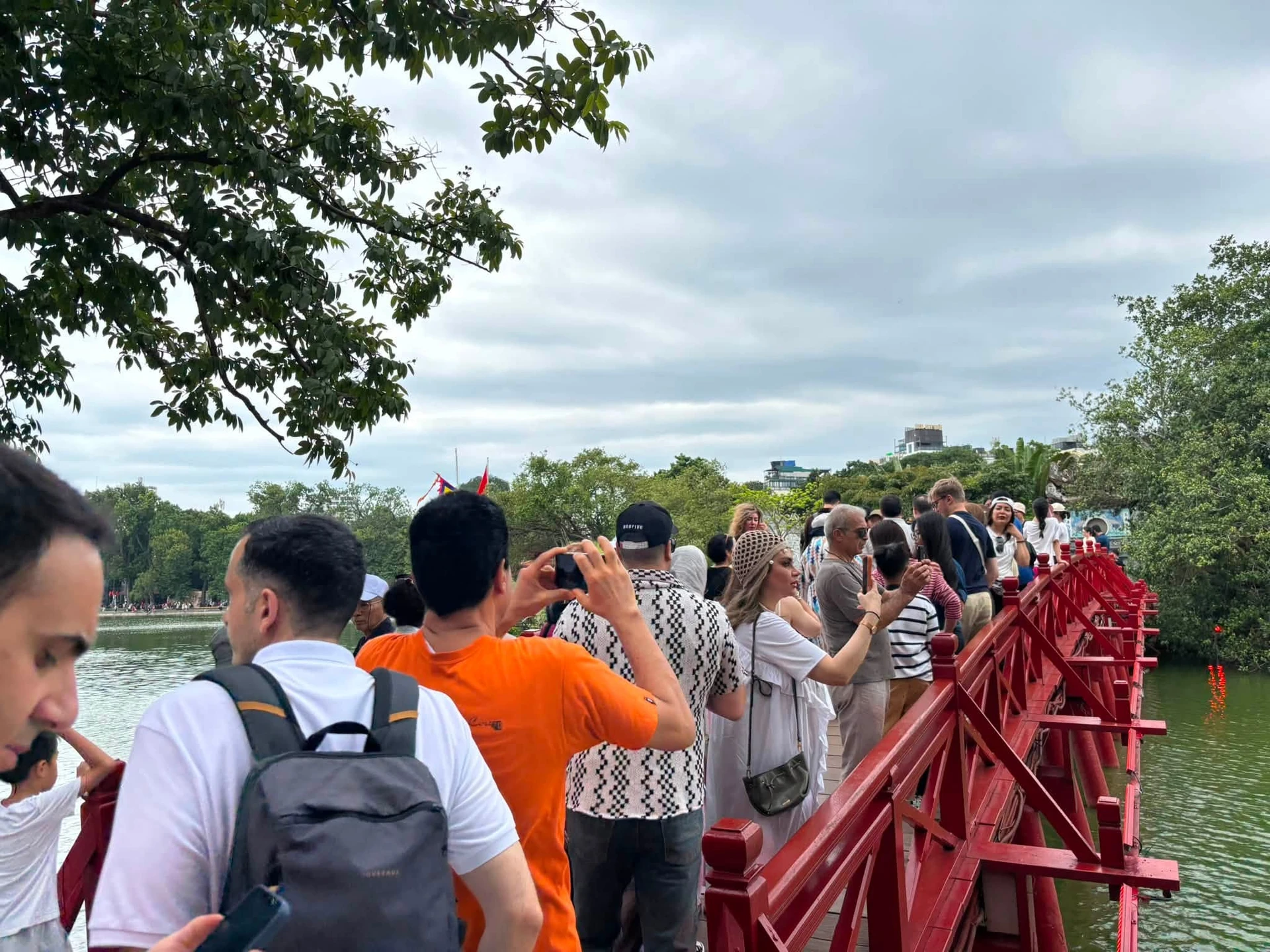
Hanoi aims to serve 47–50.5 million tourist arrivals by 2030, including 13–15 million international and 34–35.5 million domestic arrivals. The figures appear in Plan 406/KH-UBND, dated October 19, 2026, for the 2026–2030 period. They are future targets rather than achieved visitor totals.
Longer stays and higher spending
The city targets VND 295–340 trillion in tourism receipts, with average annual growth of 17–21%, compared with visitor growth of 7–8.5%. Tourism's combined contribution to regional output is targeted at 7.5–8%.
The plan seeks at least 10,000 additional four- and five-star rooms and average occupancy of about 68–70%. Desired stays are 3.5–4 days for international visitors and 2.5–3 days for domestic visitors, with average spending rising 8–10% annually.
Products, procedures and digital services
Immediate work includes simplifying event-licensing coordination in November 2026, improving visitor transport arrangements, developing regional rail products and preparing seasonal event calendars.
A round-the-clock tourism, entertainment and commerce pilot is envisaged for 2027, with evaluation in 2028 before any wider rollout. Cultural-industry spaces, walking streets, craft villages, food experiences and rural tourism form part of longer-term product development.
HanoiGo is intended to provide multilingual information and standardised service data. Hanoi also aims to digitise and connect information at 70% of major tourism sites while promoting green tourism, lower plastic use and energy efficiency. These measures have separate implementation schedules and should not be treated as an already completed tourism network.