
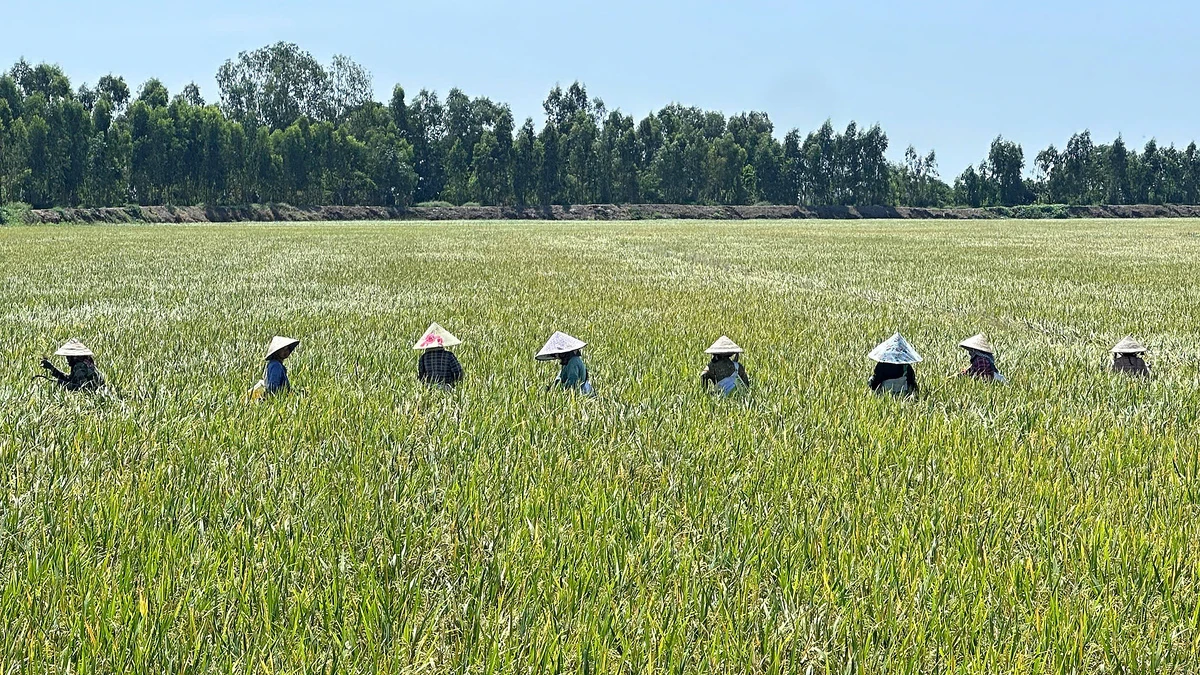
Lower-emission rice models in the Mekong Delta report additional profits of VND1.5–9.3 million per hectare per crop. VnExpress cites the crop-production authority on yield gains of 5–12% alongside reduced inputs.
Lower input use accompanies the results
The monitored models show seed reductions of 30–50%, chemical fertiliser reductions of 20–30% and two or three fewer pesticide applications. Irrigation use falls 20–40%, with emissions reductions of three to four tonnes of CO₂ equivalent per hectare per crop.
These are observed ranges, not guaranteed returns for every household. A per-crop result should also be distinguished from annual income.
By September, more than 175,000 households had registered. Nearly 421,000 hectares applied all or part of the sustainable process, including almost 160,000 in An Giang and 97,000 in Đồng Tháp.
Scaling up requires wider support
At a 15 October conference, deputy minister Nguyễn Hoàng Hiệp connected food security with quality, value and farmers' livelihoods. Cooperation among local authorities, cooperatives, businesses and researchers is intended to share transition risks.
The article cites nearly VND4 trillion in outstanding programme lending as of April 2026. That date differs from the September area update.
Australia continues support through TRVC and other initiatives. The approximately 240,000 hectares associated with its technical-process work should not simply be added to the 421,000-hectare total as if entirely separate.
The early findings indicate potential cost savings, while sustained results still depend on finance, technical support and suitable markets.