
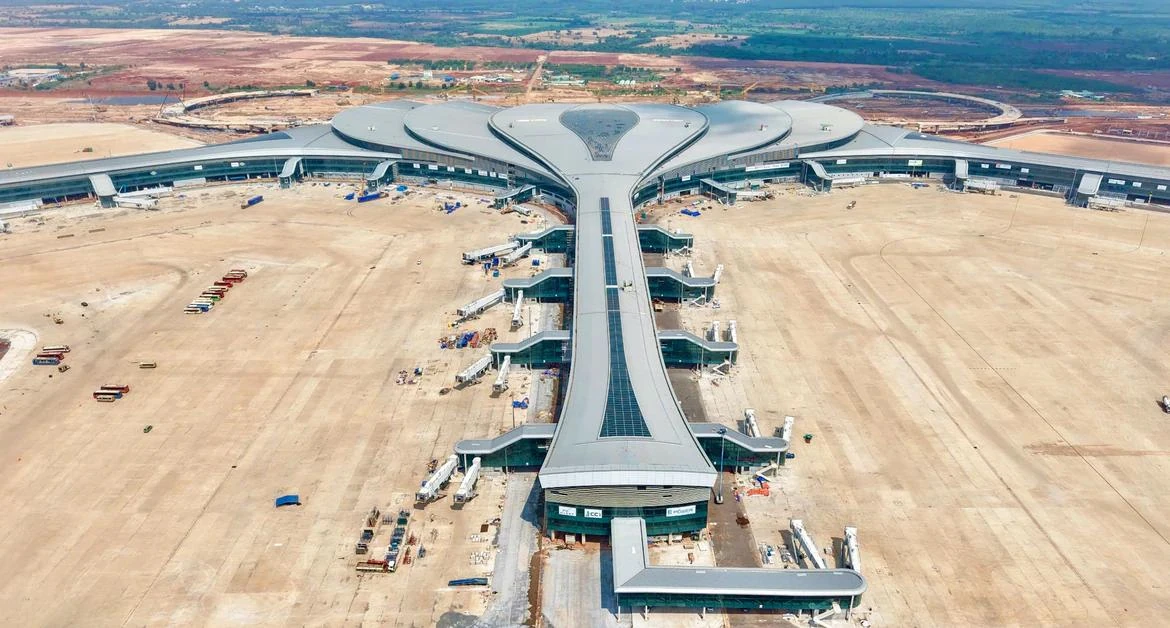
Airports Corporation of Vietnam (ACV) expects to operate up to about 366 flights a week at Long Thành International Airport, 322 of them domestic and 44 international, according to Báo Chính phủ on 28 October. The airport is aiming to start commercial operations at the end of 2026 and is in its final stage, bringing infrastructure, equipment, operating procedures and staff together while running trials.
In a separate report the same day, Báo Chính phủ cited ACV as saying that, until rail links come into service, travel between Ho Chi Minh City and Long Thành will rely mainly on roads in the early phase. Most passengers on international routes at Long Thành are expected to be travelling to or from Ho Chi Minh City and the surrounding area, which is why ACV considers smooth, reliable connections especially important to service quality.
Which airlines will fly there
Domestic carriers will shift services to the new airport step by step. Vietnam Airlines plans to fly Long Thành - Hà Nội and some international routes, while Vietjet Air plans domestic routes linking Long Thành with major economic and tourist centres.
Regulators, the airport operator and the airlines are working out flight allocation based on take-off and landing slot parameters and an operating plan split between Tân Sơn Nhất and Long Thành, in line with regulations, international aviation agreements and practical conditions. Several foreign airlines have also shown interest in operating at Long Thành, Báo Chính phủ reported.
| Flight type | Planned flights per week |
|---|---|
| Domestic | 322 |
| International | 44 |
| Total, maximum | about 366 |
Getting to the airport from Ho Chi Minh City
ACV lists two expected road approaches: the HCMC - Long Thành - Dầu Giây expressway, Nhơn Trạch bridge, Ring Road 3 and National Highway 25C; or the HCMC - Long Thành - Dầu Giây expressway, the Biên Hòa - Vũng Tàu expressway and the interchange into the airport.
To keep journey times predictable, ACV has proposed studying priority passage for airport buses and inter-airport shuttles at key junctions, along with fixed, uniformly branded pick-up and drop-off points in central areas, at transport hubs and wherever passengers gather in large numbers. For passengers connecting between Tân Sơn Nhất and Long Thành, direct shuttles with flexible frequencies matched to flight schedules are planned.
At the airport, public buses get priority bays next to the terminal. Taxis and ride-hailing cars will wait in holding areas and be dispatched centrally to dedicated pick-up lanes, while charter, tour and group vehicles use outdoor car parks or dedicated areas in the parking building. Departing and arriving traffic will be separated to limit congestion in front of the terminal.
In mid-October, the Đồng Nai city authorities added 16 bus routes serving the airport: 5 within the city and 11 inter-provincial. They include a 43 km route from Biên Hòa coach station and a 30.8 km route from the Cát Lái ferry, and the network also links the airport with Saigon bus station, the new Miền Đông coach station, Miền Tây coach station, the District 8 bus station and Tân Sơn Nhất airport.
Project background
The National Assembly approved the investment policy for Long Thành in Resolution 94/2015/QH13 on 25 June 2015, aiming for category 4F under International Civil Aviation Organization (ICAO) standards and a design capacity of 100 million passengers and 5 million tonnes of cargo a year. Phase 1 was approved by the Prime Minister in Decision 1777/QĐ-TTg on 11 November 2020, with total investment of 114,450 billion dong and capacity for 25 million passengers and 1.2 million tonnes of cargo a year.
Next milestones
According to the plan reported by Báo Chính phủ:
- November 2026: acceptance of the key works.
- Early December 2026: environmental, aviation security and staffing procedures completed.
- During December 2026: publication of aeronautical information for official operations.
Meanwhile, the ORAT trial operation programme is running through multiple real-world scenarios, alongside licensing of airside vehicles and the dossier for the aerodrome operating certificate. Customs, immigration and quarantine staff are also being prepared to work from the first days. In the medium to long term, ACV has called for mass transit links to the airport to be built soon, especially the Thủ Thiêm - Long Thành railway.