
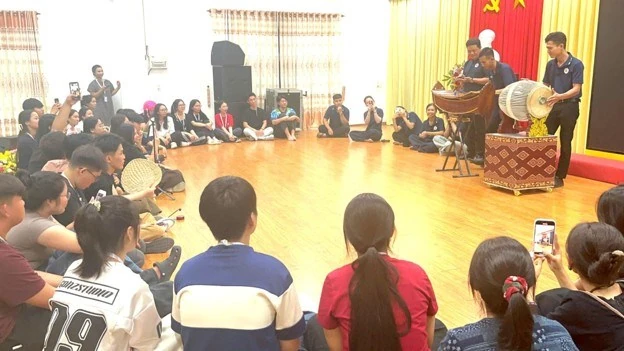
Tran Dang Khoa studies electrical engineering while playing Khmer drums at Tra Vinh University's southern Khmer arts club. Bao Van Hoa's October 17 feature follows the twenty-year-old from Vinh Long as one example of young people practising heritage.
Khoa performs in the Pinpeat ensemble and plays Chhay-dam drums while learning other instruments. Previously, his knowledge of Ro Bam dance largely came from temple performances during festivals.
Regular opportunities to practise
The club meets on Friday evenings. Members also visit communities in summer to teach Khmer folk dances to children.
The feature argues that guidance and accessible practice spaces help turn interest into ability. That is a cultural observation based on particular experiences, not a survey finding about every young person.
It also describes members recording instruction on phones alongside direct listening and observation, combining contemporary tools with traditional learning.
Practical conditions for continuity
The article compares the club's work with Khmer-language education in O Lam, An Giang. Information from an October 15 monitoring visit lists fourteen temples running 77 classes for 1,594 learners in 2026.
At Sa Lon temple, monks and volunteers provide much of the teaching. Requests concern classrooms, desks, lighting and learning materials.
A 2026–2030 local arts-preservation plan proposes youth teaching programmes. The abbot expressed willingness to cooperate, but that intention does not establish that every planned class has opened.
Khoa's experience illustrates how professional study and cultural practice can coexist when regular teaching, equipment and opportunities are available.