
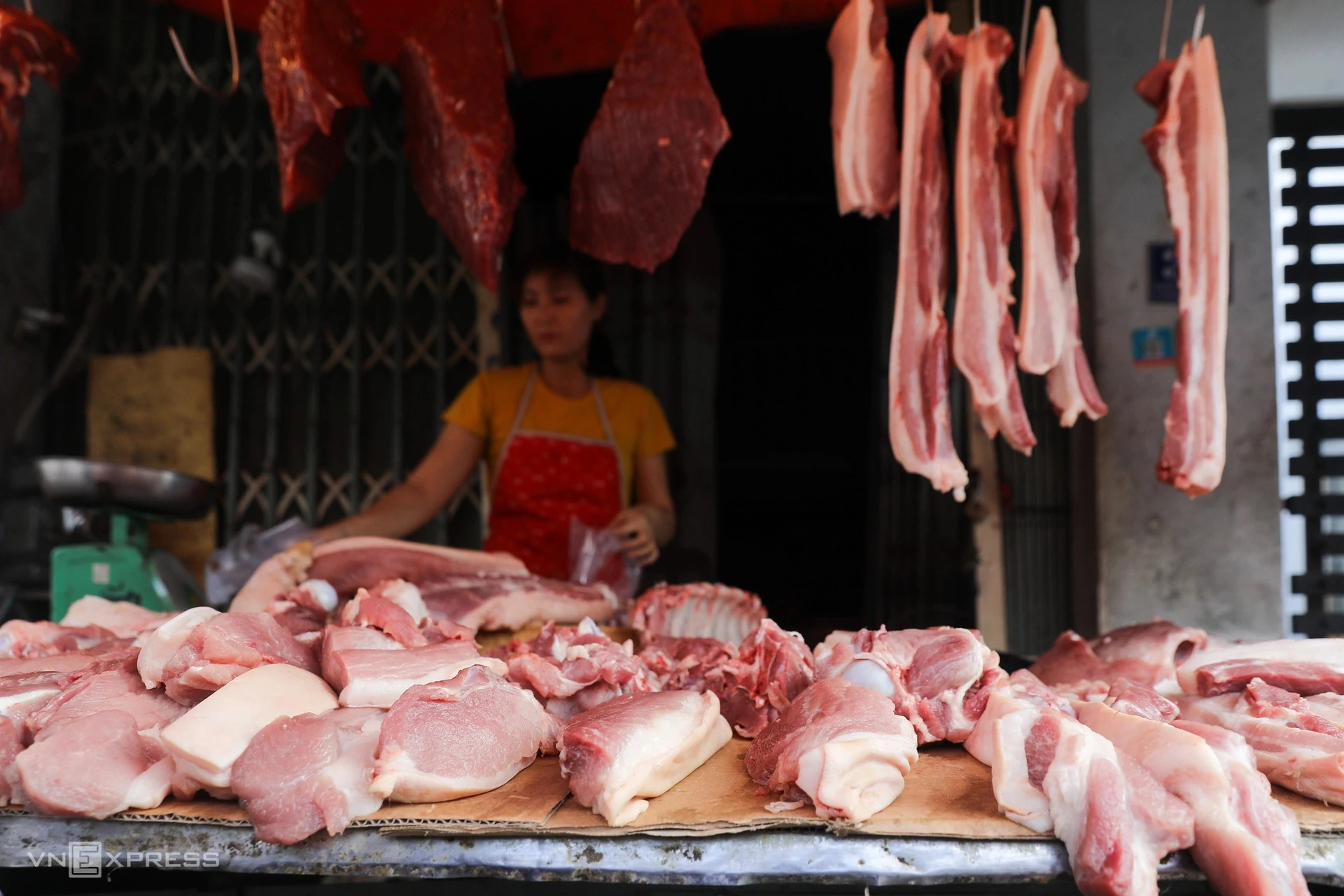
Imported pork now undercuts Vietnamese pork at many shops in Ho Chi Minh City, in some cuts by about 55%, according to a VnExpress survey. A 400-gram tray of Russian pork belly costs 43,000 dong, or 107,500 dong a kilo, while a 300-gram tray of domestic belly sells for 50,000 dong, nearly 167,000 dong a kilo. A shopper named Hoa in An Hội Đông ward told the paper she has started considering imported meat to save money.
Imports are cheaper across most cuts
The gap is not limited to belly. Prices VnExpress found at several outlets in the city:
| Cut | Imported (dong/kg) | Domestic |
|---|---|---|
| Belly | 107,500 (Russian) | Nearly 167,000 dong/kg |
| Spare ribs | About 153,000 | 180,000 dong/kg |
| Hock | About 49,000 (Russian) | More than double the import |
| Shoulder | About 60,000 (frozen) | About double the import |
Imports are rising in volume and falling in price. Customs data show Vietnam bought 124,100 tonnes of fresh, chilled and frozen pork in the first eight months, up 19% year on year, yet the import bill fell about 24% to $213 million. The average import price is about 45,000 dong a kilo, roughly 36% lower than a year earlier. Domestic supply is growing as well: the statistics office estimates nine-month pork output at 4.28 million tonnes, up 4.4%, with the pig herd at the end of September up 5.4% year on year.
Costly from farm to counter
Pig333, an international pig industry information platform, put Vietnam's live hog price in mid-October at 51,700 dong a kilo, the second highest of the nine markets it compared, behind only Italy at about 56,400 dong. Belgium was the cheapest at about 30,400 dong a kilo.
Nguyễn Trí Công, chairman of the Đồng Nai Livestock Association, said slaughter, quarantine, transport and the weight lost when offal is removed push prices up once pigs leave the farm. A live hog at 50,000 dong a kilo becomes a carcass at about 65,000 dong, and each later step, from transport and butchering to storage and retail, can add about 10-15%. Traders also carry the risk of price swings, weak demand and wastage, so the gap between live and retail prices is not all their profit, he said.
Farm costs keep climbing. Công said producing a kilo of live hog cost about 40,000 dong in 2010-2012, later 45,000 dong; small households may now spend 50,000-60,000 dong and companies 45,000-53,000 dong. Feed makes up about 60-70% of costs, and Vietnam imports 70-80% of its feed ingredients. At Vietstock 2026 on 21 October, Phạm Kim Đăng, deputy director of the Department of Livestock Production and Animal Health, said complete compound feed prices had been raised five times since the start of the year as weather and geopolitical conflict hit ingredient supply and logistics costs. Dealers report cumulative increases of 15-20%, so a 25-kg bag costs about 45,000-62,500 dong more than at the start of the year.
Low breeding output keeps costs high too. A sow in developed markets can produce about 36 piglets a year, against an average of 18-22 in Vietnam. Công added that US and Canadian producers sell the cuts their home markets prefer and export the less popular ones, including to Vietnam, which spreads their costs and gives them a price advantage.
What it means for shoppers and farmers
For households, the gap offers a cheaper option, especially for Russian hock and frozen shoulder at roughly half the domestic price. For producers, the cost gap favours large companies, which can invest in technology, automation and disease control, while small households have fewer resources. According to Đăng, small farms now supply less than 50% of the country's pork, down from before.
What comes next
Officials from the livestock department and the Đồng Nai association say the industry needs better breeding stock and sow productivity, tighter disease control and stronger supply chain links. Developing domestic feed ingredients and using farm by-products could also cut reliance on imports and lower production costs. For now, with feed prices up 15-20% since the start of the year, farm costs remain under pressure.