
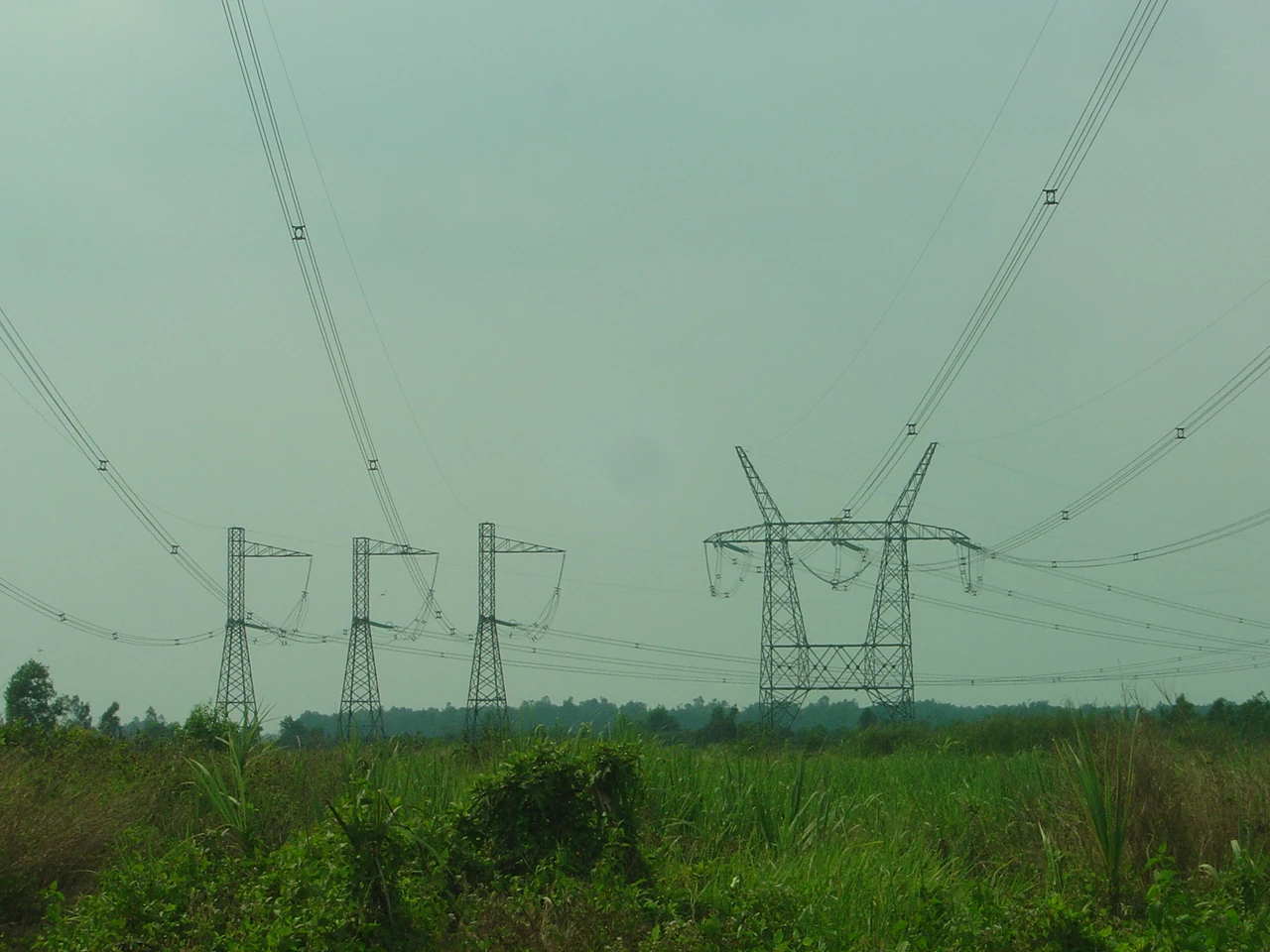

Vietnam’s Ministry of Industry and Trade has proposed early study of an ultra-high-voltage direct-current line from the south-central coast to the Red River Delta as part of a power-plan revision under consultation. VnExpress reports a preliminary length of about 1,050 km, a voltage of ±800 kV and planned capacity of 6,000–8,000 MW.
The line is a study proposal, not an announcement that investment has been approved or construction has begun. The Institute of Energy puts preliminary investment at about US$3.47 billion and says preparation and construction could take 7 to 10 years. Neither figure is a final cost or a committed completion date.
How the proposed line differs
Under the option described by the newspaper, a southern terminal would collect power from the north-central and south-central regions through the 500 kV grid. Electricity would be converted from alternating to direct current for transmission, then converted back to alternating current at the receiving end for the northern grid. The direct-current system can control the power transmitted along the line.
Existing north-south 500 kV connections use alternating current. VnExpress describes four circuits, including the double-circuit Quảng Trạch–Phố Nối line energised in 2024. The existing infrastructure is separate from the ±800 kV line still being studied.
The institute’s preliminary comparison also puts the option’s present-value cost at about US$3.6 billion. The other options reported include another direct-current technology and alternating-current lines at 765 kV and 1,000 kV. A comparison at this stage does not replace an investment appraisal.
Consultation and future demand
In a separate notice dated 24 November, the ministry confirmed that it was seeking another round of comments from agencies, organisations and local authorities on the power-plan revision. It asked those recipients to respond before 17:00 on 27 November 2026; that is a consultation deadline, not an approval or construction date.
VnExpress cited an estimate that electricity transmitted from central to northern Vietnam could rise from 32.8 billion kWh in 2027 to 47.4 billion kWh in 2030. The figures are forecasts for planning, not power already delivered.
Related KBVN+ coverage explains funding for transmission-grid development and a draft law’s approach to coordinating generation, grids and demand.