
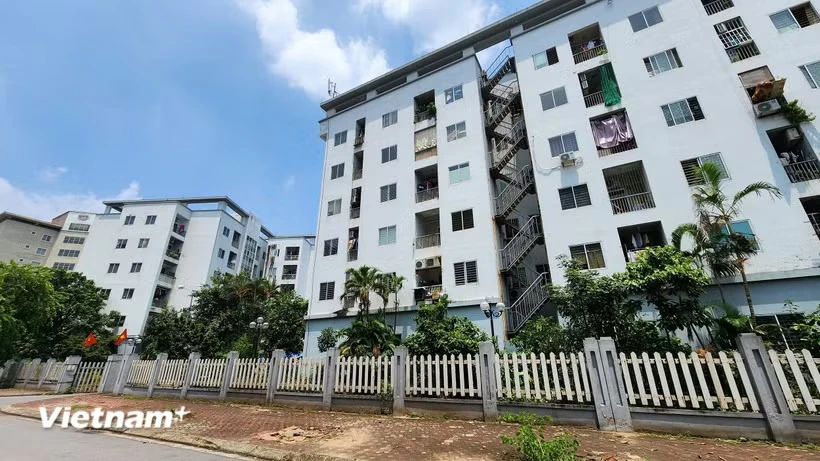
Vietnam's government has proposed tighter rules on reselling social housing in the draft amended Housing Law: five years after paying in full, owners would be allowed to sell only to people who qualify for social housing, and at no more than the price in their original contract with the developer, VietnamPlus reported. The stated aim is to curb speculation and profiteering from a housing policy meant for low-income earners.
What changes for buyers and rent-to-own tenants
The main points of the proposal:
| Case | Draft proposal |
|---|---|
| Purchased unit, five years after full payment | Resale only to eligible buyers, capped at the original contract price |
| Rent-to-own unit | No free transfer after five years as under current rules; tenants who no longer need the home may have to end the contract and return it |
| Sales, rent-to-own and rental deals | Must be recorded in the housing and real estate information system and database |
For current and would-be owners, the cap means a social housing flat could not be resold for more than was paid to the developer, and the next buyer would have to qualify for the scheme. The Ministry of Construction argues that genuine home seekers would get better access to the stock and that land resources would be used more efficiently.
Why the rules are being tightened
Deputy Construction Minister Nguyễn Văn Sinh said the goal is to make sure social housing serves the right people throughout its life, not only at the first sale. Because the state supports this type of housing in many ways, including land, credit and tax, he said, suitable controls are needed to stop people exploiting the policy and to keep it fair for those in real need.
The Vietnam Real Estate Market Research Institute (VARS IRE) said speculation persists, with many buyers reselling for profit instead of living in the units, which pushes prices up, distorts the market and shuts out genuine buyers. Besides more inspections and penalties for developers who sell to ineligible buyers and for owners who transfer illegally, the institute suggested that units go only to buyers whose eligibility has been confirmed by the authorities, and that owners who sell outside the scheme repay all the incentives they received.
Developers ask who will vet buyers
Nguyễn Anh Quê, chairman of G6 Group, which develops social housing in Phú Thọ province and Đông Anh in Hanoi, said the proposal leaves open who will vet resale buyers and how transfer prices will be set. Once a flat has been handed over and certified, the developer may no longer be directly responsible for later deals, so the rules must say which agency receives the paperwork, checks it and confirms eligibility, he said.
Supply in 2026
Ministry of Construction figures cited by VietnamPlus put the 2026 national target at 97,271 units: 80,095 social housing units for sale or rent-to-own and 17,176 rental units. By the end of 2026, 87,601 units are expected to be completed, comprising 69,552 for sale or rent-to-own and 18,049 for rent, or 90% of the plan.
What comes next
Sinh said the ministry is studying transition options so that people who bought before the amended law takes effect are not seriously disrupted, with a roadmap that meets management goals while protecting residents' legitimate interests. Regulators are also considering a database and a system for monitoring buyers and sellers to stop people getting round the law. The measures remain proposals in the draft law.